How to Cook Rice on an Induction Cooktop
To cook rice on an induction cooktop, bring rice and water to a boil in a magnetic-bottom pot, then drop to the lowest power setting and simmer covered until the water is absorbed. Turn the burner off and let the pot rest 10 minutes before fluffing.
On this page (9 sections)
- Does rice cook the same on induction as on gas?
- Which pots and pans work for rice on induction?
- How much water do you need for rice?
- How to cook rice on induction cooktop: step by step
- How do you keep rice from burning or boiling over?
- How do you rest and fluff rice after cooking?
- What can go wrong with induction rice?
- How do you clean an induction cooktop after cooking rice?
- What should you buy to make induction rice easier?
To cook rice on an induction cooktop, bring rice and water to a boil in a magnetic-bottom pot, then drop to the lowest power setting and simmer covered until the water is absorbed. Turn the burner off and let the pot rest 10 minutes before fluffing.
The method is close to what you already do on a stove. What changes is the control you get: induction heats the pot base directly and responds the moment you change a setting, so the simmer stage is easier to keep steady.
Does rice cook the same on induction as on gas?
Yes. Rice cooks by absorbing hot water, and the heat source only needs to keep the water at a simmer.
Induction does that reliably, so the grain, water ratio and resting time stay the same as on gas.
What differs is speed and response. An induction burner heats the base of the pot itself, so water comes to a boil quickly and the pot cools down fast when you lower the setting.
That fast response is the main reason rice turns out well on induction once you learn to step the power down early.
If you are new to this type of cooking, our guide on how to cook on an induction cooktop covers the general habits that make the switch easy. The same rules apply to rice: start high, finish low and keep the lid on.
Which pots and pans work for rice on induction?
You need a pot whose base a magnet sticks to. Induction only heats magnetic metal, so cast iron, most magnetic stainless steel and many enameled pots work, while glass and plain aluminum pots stay cold.
Put a magnet against the base before you cook. If it clings strongly and evenly, the pot will heat.
A weak or patchy grip means the burner may not recognize the pot at all.
The base also needs to be flat and at least 5 inches across on most portable burners. A warped base makes poor contact and cooks unevenly.
The Lazy K mat sits between the pot and the glass to stop scratches and sliding. It only works on induction and only when you cook by power settings, not temperature.
How much water do you need for rice?
Use the ratio your rice package gives as your starting point. Long-grain white rice commonly calls for about 2 parts water to 1 part rice, while brown rice needs more.
Measure the rice first and match the water to it. Induction changes how fast the water boils, not how much the grains take up.
A wide pot loses more water to steam than a narrow one, so keep the lid tight and check only near the end of the time. If the rice is still firm when the water is gone, add a splash of hot water and let it finish on low power.
How to cook rice on induction cooktop: step by step
Boil high, simmer low and rest off the heat. That three-part routine is the whole method, and the steps below show how each part works on an induction burner.
- Rinse the rice until the water runs clear, then drain it well.
- Put rice and water in a magnetic pot with a tight lid. Add a pinch of salt if you like.
- Set the burner to a high power level and bring the pot to a rolling boil without the lid.
- Stir once, put the lid on and step down to the lowest power level.
- Simmer until the water is absorbed, then switch the burner off and leave the pot covered.
- Wait 10 minutes, remove the lid and fluff the rice with a fork.
Keep the timer running so you do not lift the lid to check. Every lid lift lets out steam and slows the cooking.
What power settings should you use?
Use the highest level to boil and the lowest to simmer. On a burner with 20 power levels from 100 to 1800 W, start near the top and finish at the bottom.
The boil stage needs full power so the water reaches a rolling bubble quickly. Once the lid is on, the lowest level is enough to hold a gentle simmer in a covered pot.
Medium settings between the two often cause rice to boil over or catch at the base.
If your burner has a temperature mode, switch to power settings for rice. Temperature modes cycle the burner on and off to hold the glass at a set reading, which makes the simmer less steady.
How long does rice take on an induction burner?
Times track the rice type more than the burner. White rice is usually ready within 15 to 20 minutes of simmering, while brown rice can take twice as long.
Set the timer for the low end of the range on the package and taste at that point. Induction boils the water quickly, so the countdown should start when you lower the power, not when you first turn the burner on.
Add a few minutes if you cook at altitude or use a large, wide pot. Check that the water is absorbed and the grains are tender before resting the rice.
How do you keep rice from burning or boiling over?
Turn the power down as soon as the water boils. Rice burns when a strong heat keeps hitting a pot with little water left, and induction delivers that heat straight to the base.
Use a pot that matches the burner size so the base sits fully on the heating zone. A pot much smaller than the zone gets uneven heat around its edges.
Leave the lid on during the simmer and keep the power at the bottom level. If foam rises toward the rim, slide the pot partly off the burner for a moment rather than stirring.
A heavy pot spreads heat better than a thin one. Cast iron is the most forgiving choice for rice on induction because its thick base evens out the heat.
How do you rest and fluff rice after cooking?
Turn the burner off and leave the lid in place for 10 minutes. The trapped steam finishes the grains and loosens them from the base so the rice fluffs instead of clumping.
Use a fork or rice paddle to lift and separate the grains from the bottom up. Do not stir hard, which breaks the grains and makes the rice sticky.
If there is a thin crust on the base, leave it in the pot. Scraping it into the rice adds a burnt taste.
What can go wrong with induction rice?
Induction rice goes wrong in a few repeatable ways, and each one has a simple fix. Most problems trace back to the boil stage running too long or the simmer setting sitting too high.
- Rice still crunchy with no water: add a quarter cup of hot water, cover and cook 5 more minutes on low.
- Water left when the rice is tender: drain it off, then return the pot to the lowest setting for a minute to dry the grains.
- Boil-over: lower the power and keep the lid slightly ajar until the foam settles.
- Burned base: soak the pot before cleaning, and check that the base is flat and magnetic.
How do you clean an induction cooktop after cooking rice?
Let the glass cool completely, then wipe it with a soft pad and a cleaner made for smooth cooktops. Starch from rice water leaves a film that can bake onto the surface if you leave it.
Apply a small amount of cleaner to the cool glass and rub it over the marks. For burnt-on spots, use a scraper flat against the surface to lift them without scratching.
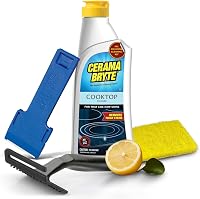
Buff the glass with a dry paper towel until the shine is even. The Cerama Bryte kit bundles a cleaner, a scraper and pads for this routine.
The burner stays warm after you switch it off, so give the glass time to cool before you touch it. A hot surface can hold a film in place and make the next cleaning harder.
What should you buy to make induction rice easier?
The first thing to get right is the pot: any magnetic-bottom pot you already own works, and a flat base at least 5 inches across is the key detail. A burner with low power levels gives you the steady simmer that rice needs.
Pick a portable burner if you cook rice on a counter or in a small kitchen. Our roundup of the best portable induction cooktops compares models by power levels and features.
If you are setting up a main kitchen, browse the best induction cooktops for home use.
A tighter budget still gets you a usable burner for rice and everyday cooking. Compare the options in our best induction cooktops under 100 dollars guide.
Once the rice is done, use a mat if the pot slides, and a smooth-cooktop cleaner to keep the glass clear. That small kit covers the two habits that matter most when you cook rice on induction cooktop surfaces week after week.
Frequently asked questions
Can you cook rice directly on an induction cooktop?
Yes. Any magnetic-bottom pot works on an induction burner, and rice cooks in it the same way as on gas or electric.
The difference is control: you pick exact power levels instead of guessing at a flame.
Why did my rice burn on the induction cooktop?
The heat was probably too high after the boil. Induction responds fast, so step down to the lowest power as soon as the water bubbles.
A thin pot makes this worse, because its base passes heat through quickly.
Does a cast iron pot work for rice on induction?
Yes, cast iron is magnetic and heats well on induction. It holds heat for a long time, so lower the power earlier than you would with a steel pot and lift the pot off the burner to stop the cooking.
How much water do I use for rice on induction?
Start with the ratio your rice package gives, often about 2 parts water to 1 part long-grain white rice. Induction boils water quickly but does not change how much water the grains absorb.
Can I use a nonstick pot on an induction cooktop?
Only if its base is magnetic. Many nonstick pots have an aluminum body with a steel plate bonded underneath, so check with a magnet before cooking.
A pot that does not stick to the magnet will not heat.
What power setting should I use to simmer rice?
Use the lowest setting your burner offers. On a burner with 20 levels from 100 to 1800 W, that bottom level keeps a covered pot at a gentle simmer without scorching the base.