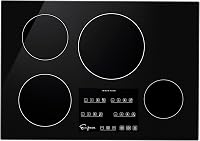
Induction vs Gas Cooktop: What Are the Benefits? (November 2026)
Induction wins on speed, precision and cleanup, while gas wins on pan freedom and visible flame control. The main benefits of induction cooktop vs gas come down to how you cook, what pans you own and whether your kitchen has the right electrical supply.
On this page (9 sections)
- Induction vs gas cooktop: which is better for most kitchens?
- Which cooktop heats faster and holds a steadier temperature?
- Which gives you better control?
- Which is safer in a family kitchen?
- Which is easier to clean?
- What cookware works on each?
- Which needs what from your kitchen?
- What do the numbers say about efficiency?
- Which should you buy?
Induction wins on speed, precision and cleanup, while gas wins on pan freedom and visible flame control. The benefits of induction cooktop vs gas come down to how you cook, what pans you own and whether your kitchen has the right electrical supply.
Induction heats the pan directly with a magnetic field. Gas heats the air and the pan base with an open flame.
That single difference shapes speed, control, safety and the daily cleaning routine.
Both options are proven and widely available. The better pick depends on your cookware, your kitchen's power supply and the meals you make most often.


Induction vs gas cooktop: which is better for most kitchens?
Induction is the better default for most homes that own magnetic cookware and have a 240V circuit. It responds faster, wipes clean in seconds and removes the open flame from the room.
Gas keeps a clear edge for wok cooking, flame-charred vegetables and kitchens without the electrical capacity for induction. A hybrid cooktop covers both needs in one cutout.
The decision rarely hinges on cooking quality alone. Budget, installation and the pans already in your cupboard carry as much weight as burner power.
Induction cooktop vs gas benefits at a glance
| Feature | Induction | Gas |
|---|---|---|
| Heat source | Magnetic field heats the pan | Open flame heats the pan and air |
| Speed | Fast boil and quick response | Slower to heat, slower to adjust |
| Control | Fine steps and steady low simmer | Visual flame, but less precise at low heat |
| Cookware | Magnetic base required | Any pan type |
| Safety | No flame, child locks, auto shutdown | Open flame and gas line |
| Cleaning | Flat glass wipes clean | Grates and caps need lifting |
| Power | Needs a suitable electrical circuit | Needs a gas supply |
The table shows the trade-off in plain terms. Induction gives you tighter control and less cleanup.
Gas gives you pan freedom and a flame you can see.
One more row matters for anyone comparing the two in a single cutout. A hybrid carries both heat sources, so it needs a gas line and a suitable electrical supply at the same time.
That makes the install more involved than either standalone option.
Which cooktop heats faster and holds a steadier temperature?
Induction heats faster and holds low temperatures more steadily than gas. It transfers energy straight into the pan base instead of losing heat around the sides.
A gas flame has to heat the pan bottom and the air around it. Wind, a draft or a wide pot can pull that heat away before it reaches the food.
Induction power arrives in controlled steps. The Duxtop 9600LS offers 20 power levels from 100 to 1800W and 20 temperature settings from 100°F to 460°F, so you can dial in a simmer.
Gas gives you a visible flame and quick visual feedback. It still takes longer to bring a large pot to a boil, and very low settings can struggle to hold a gentle simmer without a heat diffuser.
What the hybrid shows about both
The Weceleh 30 Inch Hybrid Gas & Induction puts the two side by side in one cooktop. Its 3 induction zones run at 2000W in the middle (2600W boost) and 2000W plus 1500W on the sides (2300W and 1800W boost).
Its 2 gas burners total 12,000 BTU. That pairing lets you compare directly: induction for a fast boil or a precise sauce, gas for a wok or a charred pepper.
Bridge mode pushes the induction side to 3600W, about 30% more than normal mode. That extra power spreads across the joined zone for a griddle or a large pan.
The included rectangular baking tray is sized for that mode, so you can grill steaks, salmon or fried eggs across the joined surface.
The AAOBOSI adds a useful detail for anyone worried about hot spots. Its 6.8 inch induction coil is built to spread heat evenly, which matters when you sear on a single portable zone.
Which gives you better control?
Induction gives finer control at low heat, while gas gives more visual feedback at high heat. Pick induction if sauces and simmers matter most; pick gas if you read the flame while you cook.
Induction holds a low setting without flickering out. That makes melting chocolate, keeping stock at a bare simmer and warming milk more predictable.
Gas responds as soon as you turn the knob, and you see the flame size change. The trade-off is that the lowest flame can still be too hot for delicate work, and a draft can push the heat sideways.
Power levels and presets
The AAOBOSI 1800W Portable Induction Cooktop offers 20 power levels and 20 temperature settings from 120°F to 465°F. Its four presets, Boil, Hot Pot, Stew and Keep Warm, cut down on guesswork for routine meals.
Gas burners usually give you a continuous knob rather than numbered steps. That feels natural to many cooks, but it's harder to repeat the exact same low setting twice.
Induction's numbered levels make a recipe easier to reproduce. If you cook the same dishes often, that repeatability is a real benefit.
The hybrid takes that a step further with a slide touch control and 9 levels of cooking power. A 99-minute timer and a pause function let you step away or hold a setting without turning the zone off and on.
Which is safer in a family kitchen?
Induction is safer around children and busy kitchens because there is no open flame. The risk shifts from fire and gas to a hot glass surface that stays warm after the pan comes off.
A gas flame can catch a sleeve, a tea towel or a nearby paper wrapper. Gas also adds combustion products and a gas line to the room.
Induction removes the flame and the gas connection. The pan heats, and the glass warms from contact with it, so the surface still needs care once cooking ends.
Safety features worth checking
The Weceleh hybrid includes a child safety lock, residual heat indicator, auto shutdown, overheating protection and water overflow protection. Those features cover the common accidents in a family kitchen.
The Duxtop 9600LS adds auto-pan detection that shuts off after 60 seconds if no pan or the wrong pan sits on the burner. Its child safety lock keeps the settings from being changed by small hands.
Portable burners like the AAOBOSI add a residual heat indicator and a child lock as well. Those are useful when the burner sits on an island within reach of children.
The residual heat light also reminds you the glass is still warm after the pan comes off, which covers the gap between "off" and "safe to touch."
Which is easier to clean?
Induction is easier to clean because it has a flat glass surface with no grates or burner caps. Gas cooktops collect grease and crumbs in the gaps around the burners.
On induction, a spill sits on top of the glass. Once the surface cools, a wipe usually clears it.
There are no removable parts to soak or scrub.
Gas needs the grates lifted and the burner caps removed to reach the crevices. Grease bakes onto the grate bars, and the caps can shift out of place when they're refitted.
What each surface needs
Induction glass needs a non-abrasive cleaner and a soft cloth. The Duxtop notes that the induction cooker should cool before cleaning, which is good practice for any glass top.
The Weceleh hybrid has a glass ceramic surface, so the induction side cleans like any glass cooktop. The gas side still has grates and caps that need the usual attention.
A hybrid gives you a split routine: quick wipes on the induction zones and a deeper clean on the gas burners. That's a fair trade for keeping both cooking styles.
What cookware works on each?
Induction needs magnetic cookware; gas works with any pan. That's the single biggest practical difference for anyone with a full cupboard of pans.
Cast iron and magnetic stainless steel work on induction. Aluminum, copper and glass pans don't, unless they have a magnetic base layer built in.
Gas heats any pan material, including glass, aluminum, enamel and copper. The Weceleh hybrid spells this out: its induction zones need magnetic cookware, while its gas zones fit all cookware types.
The magnet test
Place a magnet on the base of a pan. If it sticks firmly, the pan should work on induction.
If it slides off or holds weakly, it won't.
The Duxtop asks for a base of at least 5 inches for its single burner. A pan that's too small may not be detected, and auto-pan detection can shut the burner off.
If your pans fail the magnet test, gas is the lower-cost path. Replacing a full set of cookware adds real cost to an induction switch.
A hybrid softens that blow, because the gas burners still take the pans that won't work on the induction side.
Which needs what from your kitchen?
Induction needs the right electrical circuit, while gas needs a gas supply and ventilation. Check both before you choose, because installation often decides the answer.
A full induction cooktop draws a lot of power and typically needs a dedicated 240V circuit. The Weceleh hybrid lists 240 volts and needs both gas and a suitable electrical supply.
A portable induction burner is the low-commitment option. The Duxtop 9600LS runs on a standard 110/120V 15 amp outlet, the kind found in all North American homes.
It's ETL listed and built to North American electrical standards.
Gas supply and fuel type
Gas cooktops need a gas line and proper ventilation for combustion. The Weceleh hybrid supports both liquefied petroleum gas and natural gas, so it adapts to different setups.
Gas also brings a gas line and a flame into the kitchen. Some households prefer to remove that connection for safety or air-quality reasons.
Fitting the hybrid into a cabinet
The hybrid is a drop-in cooktop, and its fit depends on the cutout. The unit measures 30 x 20 x 4.3 inches and recommends a built-in cutout of 28.74 x 18.89 inches.
Measure your opening before ordering, because the gas line and the 240V supply both have to reach the same spot.
If you're weighing a full swap, our guide on whether you can replace a gas cooktop with induction walks through the electrical and installation checks.
What do the numbers say about efficiency?
Induction sends more of its energy into the pan than gas does. Less heat escapes into the room, so the kitchen stays cooler and the same meal takes less energy.
The Duxtop 9600LS is rated at 83% energy efficiency. That figure describes how much of the electrical input reaches the cookware rather than the surrounding air.
A gas flame loses heat around the sides of the pan. Some of that heat warms the kitchen instead of the food, which is why gas cooking can feel hotter to stand next to.
The difference shows up in two ways: a cooler room and lower energy waste. Exact running costs still depend on local electricity and gas rates.
Comparing the rated power
The portable burners make the numbers easy to read. Both the Duxtop and the AAOBOSI top out at 1800W, and the Duxtop lists 20 power levels from 100 to 1800W while the AAOBOSI runs 20 levels from P1 to P20.
On a standard outlet, either one delivers a full single-zone boil.
The hybrid shows what a built-in can do with more headroom. Its induction zones range from 1500W to 2600W in boost, and bridge mode reaches 3600W across the joined area.
The gas side adds 12,000 BTU of flame power on top. A hybrid therefore draws on two fuel sources rather than one, which is why its efficiency picture depends on how much time you spend on each side.
Which should you buy?
Buy induction if you own magnetic pans and want speed, control and easy cleaning. Buy gas if you want pan freedom, visible flame control or you can't add the electrical supply induction needs.
A hybrid is the practical middle. The Weceleh 30 Inch Hybrid Gas & Induction combines 2 gas burners with 3 induction zones and a 3600W bridge mode, so you keep gas for wok cooking and gain induction for everything else.
If you'd rather test induction first, a portable burner is the cheap way in. The Duxtop induction cooktop plugs into a standard outlet and lets you cook beside your gas range before committing.
It also pairs well with the timer: the 10-hour countdown suits slow dishes and long keeps.
The Nuwave induction cooktop line is another portable option worth comparing if you want a countertop burner. For a direct brand matchup, see how the ChangBERT vs Duxtop induction cooktop compare on features and power.
The benefits of induction cooktop vs gas depend on your pans and your power supply more than on brand. Pick induction for everyday speed and cleanup, keep gas for flame cooking, or choose a hybrid to get both in one cutout.
Frequently asked questions
Is induction really faster than gas?
Induction usually heats faster because the magnetic field heats the pan directly rather than the air around it. The Duxtop 9600LS reaches 1800W on a standard outlet, and the Weceleh induction zones hit up to 3600W in bridge mode, so boiling and searing come quickly.
Do I need special pans for induction?
Yes. Induction needs magnetic cookware such as cast iron or magnetic stainless steel.
A magnet that sticks firmly to the pan base means it will work, and the Duxtop asks for a base of at least 5 inches.
Is induction safer than gas?
Induction has no open flame and no gas line, and the cooktop surface only warms from contact with the pan. Features like child locks, residual heat indicators and auto shutdown add protection, though the glass still stays hot after cooking.
Can I keep gas for some cooking and add induction?
Yes. A hybrid like the Weceleh 30 inch model gives you 2 gas burners and 3 induction zones in one cooktop.
A portable induction burner is the cheaper way to add induction beside an existing gas range.
Which is easier to clean, induction or gas?
Induction is easier because it has a flat glass surface with no grates or burner caps to remove. Gas cooktops need grates lifted and crevices wiped, while an induction top usually wipes clean once it cools.