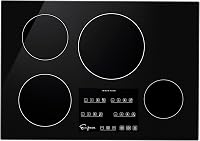
GE Profile vs Café Induction Cooktop: Which Is Better? (November 2026)
Café wins on style and finish choices, while GE Profile wins on value for the same core induction cooking. In this GE Profile vs Café induction cooktop matchup, pick Café for a statement kitchen and GE Profile for smart features at a lower price tier.
On this page (8 sections)
Café wins on style and finish choices, while GE Profile wins on value for the same core induction cooking. For most kitchens, the GE Profile vs Café induction cooktop question comes down to how much you'll pay for design and whether the smart features matter to you.
Both are built-in electric induction cooktops from GE Appliances. They heat pans with magnetic coils under a glass surface, so the cooking method and the cookware rules are the same.
That means the choice is not about cooking speed. It's about finishes, controls, price tier and the small extras each line adds.
 Best for replacing worn GE knobs
MAHOOK WB03X29315 Gas Metal Knobs for GE
 Best for trying induction before you remodel
Duxtop 9600LS Portable Induction Cooktop
GE Profile vs Café: what actually differs?
The two lines share induction technology and split on design, controls and price tier. Think of Café as the style-led sibling and GE Profile as the feature-led one.
Both sit above GE's base appliances. Café leans into statement finishes and matching handle styles.
GE Profile puts its effort into smart-home features and practical controls.
Because the heating method is identical, neither line changes how fast a pot of water comes to a boil. The real differences show up in the surface finish, the control layout and how the cooktop fits your kitchen design.
If you're still deciding between induction and other electric cooktops, our guide to electric vs induction cooktop covers the fundamentals before you pick a brand line.
Where the lines overlap
Both use electromagnetic coils under a glass-ceramic surface. Both need magnetic cookware, and both shut a burner down when no pan is detected.
Both also pair with GE's smart-app features on most models. You can check burner status and receive alerts from your phone on the connected versions.
The overlap is why the matchup feels close. Once you strip away the finish and the badge, you're comparing two cooktops that behave alike in daily cooking.
Where they split
Café offers more finish choices, including matte and brushed looks, plus handle styles that match its other appliances. That design consistency is the reason many buyers pay more for it.
GE Profile stays closer to conventional stainless and black finishes. Its appeal is a smart feature set at a lower price tier.
The control layout also differs. Café models tend to use a cleaner, more design-forward control arrangement, while GE Profile keeps controls practical and easy to read.
How much do burner layout and power matter?
Burner count and power matter more than the badge on the glass. Match the layout to the pots you actually use, not to the finish you like in a showroom.
Both lines offer four-burner and five-burner layouts across their ranges. A five-burner model adds flexibility for a griddle or a large stockpot.
Look at the burner sizes first. A small simmer burner suits sauces, while a large burner handles a stockpot or a cast-iron skillet.
A bridge burner, where offered, lets you heat a griddle or a wide pan across two zones.
Match burners to your cooking
If you cook one big meal at a time, a four-burner cooktop with one large and one small burner covers most days. If you regularly run several pans at once, a five-burner layout saves shuffling.
Check the power rating of the largest burner. Higher wattage shortens the wait for a boil, but it also asks more of your electrical circuit.
Neither line changes the basic rule: induction power is measured in watts per burner, and the top burner does the heavy lifting.
Check your electrical circuit first
A built-in induction cooktop draws more current than a portable burner. Most full-size models need a dedicated 240 V circuit, so confirm what your kitchen already has before you order.
If your kitchen only has a standard 120 V outlet free, a portable burner is the practical way to cook on induction while you plan the remodel. The Duxtop 9600LS is the model we'd point you to for that test run.
Which controls and smart features are easier to live with?
GE Profile leans into app control and practical touch controls, while Café favors a cleaner control look. Pick based on whether you'll actually use the app.
Smart features on connected GE Profile models let you check a burner from your phone, get alerts and adjust settings remotely. That's useful if you're forgetful about leaving a burner on.
Café models offer similar app support on connected versions, but the control panel is styled to look less busy. The trade-off is that some functions take an extra tap.
Touch controls vs knobs
Most induction cooktops in both lines use touch controls on the glass. Some models keep a physical knob for power, which many cooks prefer for quick adjustments.
Touch panels are easier to wipe clean. Knobs give faster feedback when your hands are wet or busy.
Neither line is clearly better here. It comes down to whether you value a clean glass surface or the feel of a dial.
Do you need app control?
If you rarely use smart features on other appliances, don't pay extra for them. The app adds convenience, but it doesn't change how the burner heats a pan.
If you like checking status remotely or setting a timer from another room, the GE Profile smart features earn their place. That's the case where the feature-led line makes more sense.
Which line fits your kitchen design?
Café fits a statement kitchen; GE Profile fits a conventional one. The finish you choose should match the appliances already in the room.
Café's range of finishes is its main selling point. If your kitchen has a strong design theme, a Café cooktop can tie the room together in a way GE Profile's conventional finishes can't.
GE Profile is the safer pick when your kitchen is already finished and you want the cooktop to blend in. Its stainless and black options sit comfortably next to most appliance sets.
Finishes and handle styles
Café offers matte and brushed finishes plus handle styles that match its ovens and refrigerators. That coordination is the reason design-focused buyers choose it.
GE Profile stays with the more standard finishes. You get fewer choices, but the ones available are easy to match.
If you're replacing a single appliance in a finished kitchen, fewer choices can actually be easier. You find the closest match and move on.
When design should decide
Let design decide when the cooktop will be visible from a living area or is the centerpiece of the kitchen. In an open-plan home, the finish matters as much as the burner count.
If the cooktop sits in a closed kitchen or behind a peninsula, design matters less. Spend the difference on a better burner layout instead.
Our comparison of induction cooktop vs glass top explains how the surface looks and behaves once installed, which helps when you're matching a finish.
Who should buy GE Profile?
Buy GE Profile if you want smart features and a practical layout without paying for statement design. It's the value-led choice in this matchup.
The line suits cooks who want induction's speed and easy cleanup but don't need their cooktop to make a design statement. The smart features add real convenience for people who like app control.
It also suits anyone replacing an older GE appliance and staying within the same ecosystem. Matching the app and controls keeps things simple.
Skip GE Profile if your kitchen has a strong design theme that needs a specific finish. The conventional options may not match what's already there.
Best for smart-home cooks
If your home already runs on app-connected appliances, GE Profile fits in without extra effort. You get burner alerts and remote checks from the same app you use for the oven or fridge.
That's the clearest reason to choose this line over Café. The feature set is the point.
Best for a budget-conscious remodel
GE Profile sits at a lower price tier than Café for similar cooking performance. If you're remodeling on a budget and the design is already settled, the savings go further here.
Use the difference on a better hood or a set of induction-ready pans. Those affect daily cooking more than a fancier finish does.
Who should buy Café?
Buy Café if design and finish coordination are the reason you're shopping. It's the style-led choice, and the extra cost buys appearance more than cooking performance.
Café suits a kitchen where the cooktop is part of the look. Its finishes and handle styles let you match the rest of the Café suite, which is hard to do with a conventional finish.
It also suits buyers who want a cleaner control panel look. The styling is deliberate, and it shows on the glass.
Skip Café if you'd rather spend on features or burner flexibility. The design premium doesn't change how the cooktop heats a pan.
Best for a coordinated appliance suite
If you're buying a full kitchen suite, Café's finish options make coordination easier. The cooktop, oven and fridge can share a look.
That's the case where the premium is easiest to justify. A matched kitchen is hard to build from mixed finishes.
Best for a design-forward kitchen
An open-plan kitchen with the cooktop on show rewards a finish that looks intentional. Café gives you more ways to get there.
If the room is already finished and you're swapping one appliance, the wider finish range is less useful. You'll likely pick the closest match and stop there.
Can you try induction before you commit?
Yes, and it's the cheapest way to settle the cookware question. A single portable burner plugs into a standard outlet and lets you cook on induction for a few weeks.
That test tells you whether you like the speed and the cleanup. It also tells you whether your current pans have magnetic bases.
If your pans fail the magnet test, you'll need new cookware either way. Better to find out before the built-in cooktop arrives.
High heat for searing
If your main reason for wanting induction is steakhouse searing, a portable burner with a high top end is a useful stopgap. The Nuwave Pro Chef reaches 575°F with 94 temperature settings.
That's a high top end for a portable burner. It's a way to get a hard sear while you save for the built-in model.
Replacing worn knobs on an older GE range
If you're still cooking on an older GE Profile gas range while you plan the switch, a worn knob is an easy fix. The MAHOOK WB03X29315 replacement fits the listed GE Profile gas models and comes as a five-pack.
That's a cheap repair that keeps the old range usable until the induction cooktop arrives. It won't fit an induction cooktop, so treat it as a stopgap only.
Which is the better buy?
For most readers, GE Profile is the better buy because it delivers induction cooking and smart features at a lower price tier. Choose Café when the finish and suite coordination are worth the premium to you.
The GE Profile vs Café induction cooktop decision is rarely about cooking performance. Both lines heat pans the same way, so the real split is design and price.
If you want your cooktop to blend in and you'll use app control, GE Profile is the pick. If your kitchen has a design theme and you're buying a matched suite, Café earns its extra cost.
Whichever you choose, confirm your electrical circuit and test a pan with a magnet before ordering. Those two checks prevent the most common induction surprises.
The decision rule
Pick GE Profile for smart features and a practical finish at a lower price tier. Pick Café for a statement finish and a coordinated appliance suite.
If you're still unsure, start with a portable burner and live with induction for a few weeks. Our roundup of the best Nuwave induction cooktops covers another portable option if you want a second brand to compare.
What to check before you order
Measure the cutout in your counter and confirm a dedicated 240 V circuit. Then check that your most-used pans have magnetic bases.
Those three checks matter more than the badge on the glass. Get them right and either line will serve you well.
Frequently asked questions
Is Café made by GE?
Yes. Café is GE Appliances' design-focused line, sitting above GE Profile in finish and style choices.
The cooking technology and app support share a common GE base, so the gap between them is mostly appearance, controls and price tier rather than how induction heats a pan.
Does a GE Profile induction cooktop need special cookware?
Yes. Like every induction cooktop, it needs magnetic cookware such as cast iron or magnetic-bottom stainless steel.
A magnet that sticks firmly to the pan base is the quick test, and pans under 5 inches across often won't be detected by the burner.
Can I use a portable induction burner while I decide?
Yes. A single-burner unit like the Duxtop 9600LS plugs into a standard 120 V outlet and lets you cook on induction for a few weeks.
It won't match the power or burner count of a built-in GE Profile or Café cooktop, but it settles the cookware question cheaply.
Which line has more finish options?
Café offers the wider set of statement finishes and handle styles, which is its main draw. GE Profile sticks to more conventional looks with smart features built in.
If your kitchen design is settled and you want the cooktop to match it, Café gives you more to work with.