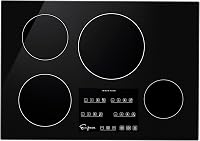
Which Cookware Works on an Induction Cooktop?
Only cookware with a magnetic base works on an induction cooktop. If a magnet sticks firmly to the bottom of a pot or pan and the base is flat and 5 to 12 inches wide, it should heat. Glass, ceramic, aluminum and copper pans without a magnetic layer will not.
On this page (10 sections)
- Which cookware materials work on induction?
- Which pan types suit an induction cooktop?
- Which cookware sizes fit an induction cooktop?
- Which cookware works with each cooktop type?
- How do you test cookware before buying a cooktop?
- Which cookware materials cause the most problems?
- How do you protect the glass surface from cookware?
- Which extras make induction cooking easier?
- What should you check before buying cookware for induction?
- The final word on cookware for induction
A magnetic base is the whole test. If a magnet sticks firmly to the bottom of a pot or pan and the base is flat and 5 to 12 inches wide, that pan should heat on an induction cooktop.
If the magnet slides off, the pan won't work without a magnetic adapter layer.
This guide walks through each material you might already own, the shapes and sizes that fit, and the extras that keep the glass surface protected. It also points to the induction cooktop for all types of utensils you might buy, so you know which models accept the widest range of cookware.
Which cookware materials work on induction?
Cast iron and magnetic stainless steel are the strongest matches. Both carry the magnetic field well and heat quickly.
Enameled cast iron works too, because the iron core underneath does the heating.
Aluminum and copper alone do not work.
Induction heats the pan itself through a magnetic field rather than heating a coil under glass. That is why the base material decides everything.
Here is how the common materials stack up.
| Material | Works on induction? | Notes |
|---|---|---|
| Cast iron | Yes | Heats evenly but is heavy and slow to change temperature |
| Enameled cast iron | Yes | The iron core is magnetic; the enamel coating is not a barrier |
| Magnetic stainless steel | Yes | Many stainless pans carry a magnetic base layer |
| Carbon steel | Yes | Thin, responsive and magnetic |
| Aluminum | No, unless it has a magnetic base plate | Plain aluminum pans will not heat |
| Copper | No, unless it has a magnetic base plate | Tin or stainless-lined copper needs a steel base to work |
| Glass | No | Glass does not carry the magnetic field |
| Ceramic | No | Ceramic pots do not heat on induction |
The practical test is the magnet. Hold one against the base of a pan.
A strong pull means the base has enough magnetic material. A faint pull or a sliding magnet means the base is probably too weak.
If you want to know how does an induction cooktop work in more detail, that page explains the magnetic field in plain terms. The short version: the field excites the metal in the pan base, so the pan must be the right metal.
Our induction cooktop vs glass top comparison covers what changes when you already own non-magnetic pans.
Rule: if the magnet doesn't stick firmly, don't buy the pan for induction.
Which pan types suit an induction cooktop?
Skillets, saucepans, stockpots and Dutch ovens all work if the base is magnetic. The pan type matters less than the base.
A magnetic skillet cooks the same way a magnetic saucepan does.
What changes is how the pan's shape and size fit the cooking zone.
Skillets and frying pans need a flat base so the whole surface contacts the glass. A pan with a rounded or warped base will rock and heat unevenly.
Nonstick coatings are fine as long as the metal underneath is magnetic.
Saucepans and milk pans are the easiest fit. Their bases are usually flat and modest in size, so they sit well inside the cooking zone.
Stockpots and Dutch ovens bring weight. A large cast iron Dutch oven on a portable cooktop is stable, but check the cooktop's pan size limit before you buy.
The Duxtop 8100MC works with cookware from 5 to 12 inches wide.
Woks are the weak spot. A round-bottom wok has almost no flat contact area, so it will not sit properly on induction glass.
A flat-bottom wok with a magnetic base can work, but you lose the round-bottom cooking style. Griddles work when the base is flat and magnetic.
Rule: buy flat-bottomed pans in the shapes you use most, and skip round-bottom woks.
Which cookware sizes fit an induction cooktop?
Match the pan base to the cooking zone. A base from 5 to 12 inches works on the Duxtop 8100MC, and that band is a good general guide for portable models.
Too small and the pan may not trigger the sensor.
Too large and it hangs over the zone and wastes heat.
Measure the base, not the rim. Pan rims flare outward, so a 12-inch skillet often has a base closer to 10 inches.
The base is the part that must sit flat on the glass and carry the magnetic field. For a single portable burner, a base of 6 to 10 inches covers most everyday cooking.
A base smaller than about 5 inches often fails to register.
On a multi-zone cooktop, match each pan to its ring. A 5-inch milk pan on a large ring leaves most of the zone unused.
A 12-inch skillet on a small ring overhangs and heats unevenly. Pan weight matters for portable units too.
A heavy cast iron Dutch oven on a lightweight countertop burner can feel top heavy. The Duxtop 8100MC weighs 5.8 pounds, so a very heavy pot changes how stable the setup feels.
If you are choosing a cooktop to suit the pans you already own, our electric vs induction cooktop breakdown shows how each surface handles cookware size and shape.
Rule: measure the pan base, keep it within the cooktop's stated range, and match it to the ring.
Which cookware works with each cooktop type?
Portable single burners and full cooktops use the same magnetic rule. A countertop model like the Duxtop 8100MC and a built-in induction cooktop both need magnetic bases.
The difference is how many pans you can use at once and how wide each zone is.
Portable burners have one zone and a pan size band. The Duxtop 8100MC accepts 5 to 12 inch cookware and offers 15 power levels from 200 to 1800 watts.
That range covers simmering and boiling, but the pan still has to be magnetic.
Its auto-pan detection is the feature that catches wrong cookware. If no compatible pan sits on the surface, the unit shuts off after 60 seconds.
That is a useful safety net for anyone testing new pans. It also warns you with a diagnostic message if the pan is wrong.
Built-in cooktops spread the same technology across several zones. The magnetic requirement does not change, so a non-magnetic pan fails on both.
Dual-zone models handle both small and large pans on one ring.
The Duxtop 8100MC is ETL approved and runs on 120 volts and 15 amps, which is standard household current. That makes it easy to plug into a normal kitchen outlet while you test which pans work.
Our Duxtop induction cooktop roundup compares more models in the line if you want more than one zone.
Rule: choose the cooktop by zone count and pan size band, then confirm each pan is magnetic.
How do you test cookware before buying a cooktop?
Use a magnet and a flat surface. The magnet test takes seconds and costs nothing.
Hold a kitchen magnet against the base of each pan you own.
A firm pull means the pan should work. A weak or absent pull means it won't.
Do the test on a cool, dry pan, because water or grease can hide the feel of the magnet. Press the magnet flat against the base and try to slide it.
A strong stick resists sideways movement.
Then check flatness. Lay a straight edge or ruler across the base and look for gaps.
A base that rocks on a flat counter will rock on induction glass too. Small gaps mean uneven contact and patchy heating.
Repeat the test on any pan you plan to buy. Many pans carry a magnetic base plate even when the body is aluminum.
A pan marked "induction ready" or "induction compatible" should pass the magnet test.
If a pan fails the magnet test, you have three choices. Buy a magnetic pan, use a magnetic adapter disc, or keep the pan for a different heat source.
Adapter discs work but slow heating and add an extra layer between pan and glass. That extra layer is also why mats and discs change performance.
The Lazy K mat sits under the pan to protect the glass. With a weak magnetic base, the cooktop can be slower to recognize the pan.
Rule: test every pan with a magnet and a straight edge before you commit to induction.
Which cookware materials cause the most problems?
Thin aluminum, copper and glass cause the most failures. These materials either lack magnetic material or carry too little of it.
A pan with a thin magnetic coating can pass a weak magnet test and still heat slowly or trip the pan sensor.
Glass and ceramic pots fail outright. They are designed for radiant, halogen or gas heat.
Induction needs metal. No coating or mat turns a glass pot into an induction pan.
Clad cookware can behave unevenly. A pan with many metal layers may pass the magnet test but produce a high-pitched sound during cooking.
The Duxtop 8100MC notes that this noise can come from clad cookware with multiple metal layers sandwiched together. It is a normal side effect, not a fault.
Enameled cast iron is the reliable all-rounder. The iron core is magnetic, the enamel does not block the field, and the pan heats steadily.
It is heavy, so lift with care on a portable burner. Weak magnetic bases are the hidden problem.
A pan can stick to a magnet and still heat slowly if the magnetic layer is thin. The Lazy K mat warns that pans with a weak magnetic coating may heat slower with the mat in place.
Rule: skip plain aluminum, copper, glass and ceramic, and be wary of very thin magnetic coatings.
How do you protect the glass surface from cookware?
Use smooth-based pans and clean the glass after every cook. Rough bases and sliding pans scratch the surface.
A mat or a cleaning routine keeps the glass clear and working well.
Induction glass is tough but not scratch proof. Check pan bases for burrs or rough edges before you set them down.
Cast iron can have a slightly textured base that marks the glass over time. A mat adds a soft layer between pan and surface.
The Lazy K mat is a silicone and fiberglass pad that sits on the cooktop under the pan. It is 11 inches across and heat resistant up to 480°F.
It keeps pans from sliding and protects the glass from scratches. It is only for induction cooktops and only for power settings.
Cleaning matters just as much. Spills bake onto the glass and can leave a dull film.
The Cerama Bryte kit includes a 10 oz bottle of non-abrasive cleaner, a scraper, a pad tool and a cleaning pad. It is made for smooth cooktops, including induction, glass and ceramic.
The cleaner is phosphate and silicone free. Apply a quarter-sized amount to a cool cooktop, rub with the pad and buff dry.
For burnt-on food, use the single-edge scraper. Avoid dragging pans across the glass.
Lift and set them down instead. Even a smooth base can trap grit and leave a scratch when slid.
Rule: set pans down gently, use a mat for heavy or sliding pans, and clean the glass while it is cool.
Which extras make induction cooking easier?
A mat and a good cleaner cover the two main extras. A mat protects the glass and steadies the pan.
A cleaner keeps the surface free of baked-on film.
Neither changes whether a pan works, so test cookware first. A mat does not make a non-magnetic pan work.
The Lazy K mat's own guidance is clear on this: it is not an induction plate adapter. A pan with no magnetic base still fails, mat or no mat.
The mat only helps when the pan already passes the magnet test. It also slows heating a little when the pan's magnetic coating is weak.
If your pan heats slowly with the mat on, try it without. If the pan heats fine without but slides around, the mat is worth keeping.
A scraper handles the burnt-on spots that a cloth cannot. The Cerama Bryte scraper is designed for that job on smooth glass.
Keep the blade flat to the surface and lift rather than dig. A pad tool gives you a handle to press with.
That helps when you scrub a stubborn ring without pressing your fingers onto the glass. For everyday wiping, a soft cloth or paper towel is enough.
The full kit is for deeper cleaning when the glass looks dull or has burnt rings.
Rule: buy the mat for pan stability and glass protection, and the cleaner for the surface, but choose the pans first.
What should you check before buying cookware for induction?
Check the base material, the base width and the base flatness. Those three checks decide whether a pan works.
Brand, color and coating come after.
A pretty pan with a non-magnetic base will not heat.
Base material is the first check. Look for cast iron, carbon steel or magnetic stainless steel.
"Induction ready" or "induction compatible" on the packaging is a good sign, but the magnet test is the real proof. Base width is the second check.
The Duxtop 8100MC accepts 5 to 12 inches. A pan narrower than 5 inches may not trigger the sensor, and one wider than 12 inches overhangs the zone.
Base flatness is the third check. A flat base contacts the glass and heats evenly.
A warped or rounded base rocks and leaves cold spots. This matters most with skillets, which have the widest bases.
Weight is the fourth check for portable units. A very heavy pan on a lightweight burner can feel unstable.
Pan handles matter too. Induction heats the pan, not the glass, but the pan's own handle still gets hot.
Oven-safe handles help if you move pans from cooktop to oven. If you are still weighing a surface choice, read our electric vs induction cooktop comparison.
Rule: base material, base width and base flatness first, then the extras.
The final word on cookware for induction
The induction cooktop for all types of utensils comes down to one habit: test your pans with a magnet before you buy anything. Cast iron, enameled cast iron and magnetic stainless steel are your safe bets.
Aluminum, copper, glass and ceramic need a magnetic base plate or a different heat source.
If you own mostly magnetic pans, induction gives you fast, precise heat. If you own mostly non-magnetic pans, count the cost of replacing them or choose a radiant surface instead.
That one decision shapes the whole cooktop. Pick a portable burner like the Duxtop 8100MC when you have one or two magnetic pans and a standard outlet.
Pick a multi-zone cooktop when your magnetic collection is larger. Either way, let the pans you own or plan to buy decide the model.
If you are comparing surfaces for a full kitchen, our induction vs glass top guide shows where each one makes the most of the cookware in your cupboard. Test first, then buy the cooktop that fits the pans you actually use.
Frequently asked questions
How do I know if my pan works on an induction cooktop?
Hold a magnet against the flat bottom of the pan. If it sticks firmly and the base is flat and sits between 5 and 12 inches wide, the pan should work on most portable induction cooktops.
A weak or sliding magnet means the base lacks enough magnetic material.
Can I use glass or ceramic pots on an induction cooktop?
No. Glass and ceramic pots do not carry the magnetic field, so they will not heat on an induction cooktop.
The cooktop surface itself is glass ceramic, but that is the cooking surface, not the pot, and the two are not the same thing.
Why does my magnetic pan fail to heat on induction?
The base may be too small for the cooktop's pan sensor, or it may not be perfectly flat. Induction needs good contact between a flat base and the surface.
A warped base or one narrower than about 5 inches often trips the auto-pan detection.
Will a silicone mat stop my pans from working on induction?
No, as long as the pan base is strongly magnetic and flat. The Lazy K mat sits between the pan and the glass, so a weak magnetic coating can make the cooktop slower to recognize the pan.
Use it only on induction and only in power mode.