Induction Cooktop vs Gas Cost: Which Costs Less? (November 2026)
Induction costs less to run day to day because it puts more of the energy it draws into the pan. Gas usually costs less to install, but it vents heat into the room and needs a gas line or bottle.
On this page (8 sections)
- Induction cooktop vs gas cost: which is cheaper overall?
- How efficient is each type, and what does that cost you?
- What does installation add to each bill?
- Does cookware change the cost picture?
- Which type heats and cooks more cheaply in daily use?
- Safety, heat and hidden costs
- Who should buy which?
- Verdict: which costs less?
Induction costs less to run day to day because it puts more of the energy it draws into the pan. Gas usually costs less to install, but it vents heat into the room and needs a gas line or bottle.
That split is the heart of the induction cooktop vs gas cost question. The cheaper option depends on whether you count the purchase and install bill or the monthly energy bill.
This comparison looks at both. It covers efficiency, installation, cookware and the everyday habits that decide which type costs less over time.

Induction cooktop vs gas cost: which is cheaper overall?
Induction wins on running cost and gas wins on installation cost in most kitchens. Add the two together and the answer depends on how long you keep the appliance and what wiring already exists.
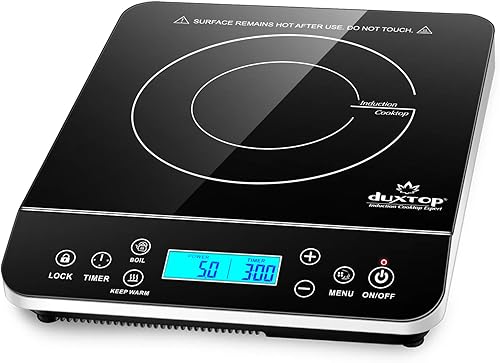
An induction cooktop converts a high share of the electricity it draws into heat in the pan. The Duxtop 9600LS states 83% energy efficiency, and the Nuwave Gold claims 85% to 90%.
Gas burners send much of their heat around the sides of the pot and into the room.
That gap shows up twice. You draw less energy for the same cooking task, and your kitchen stays cooler, so the extractor fan and air conditioning work less.
Gas still has the edge on the sticker and the install. A gas line is often already in place, while induction may need a dedicated circuit.
Our benefits of induction cooktop vs gas guide covers the cooking side of that trade.
When induction costs less over time
Induction pulls ahead when you cook often and keep the cooktop for years. The efficiency gap slowly pays back the higher purchase and wiring cost.
It also helps if your kitchen already has a 240 V circuit or you buy a portable burner. A plug-in unit like the Duxtop 9600LS skips the electrician entirely.
When gas costs less over time
Gas stays cheaper when the line is fitted, the install is simple and energy prices favor it. A home with cheap gas and pricey electricity may never see induction pay back.
Short ownership favors gas too. If you sell within a couple of years, the install saving matters more than a slow running-cost gain.
How efficient is each type, and what does that cost you?
Induction puts roughly 83% to 90% of its energy into the pan, while a gas flame loses a large share to the air. That efficiency figure is the single biggest driver of running cost.
The Duxtop 9600LS states 83% efficiency. The Nuwave Gold claims 85% to 90%.
The AAOBOSI and the Duxtop 8100MC both top out at 1800 W.
Gas burners heat the pot and the room at the same time. Some of the flame wraps the base, but a lot of heat escapes upward and sideways, which is why gas kitchens feel warmer.
To turn efficiency into money, multiply your cooking hours by the burner's wattage and your electricity rate. Then compare that with gas use at your local gas rate.
Rates vary by region, so the totals will differ from home to home.
Why the wattage number is not the whole story
A higher wattage does not mean a higher bill by itself. What matters is how long the burner runs at full power and how much of that energy reaches the food.
A 1500 W burner on a large coil can cook a pan of pasta as fast as an 1800 W unit on a small coil. The Nuwave Gold has an 8-inch heating coil, while the AAOBOSI uses a 6.8-inch coil.
Efficient habits matter more than the label. Boil with a lid, match the pan to the burner and drop to a simmer once the water is hot.
How the power and temperature ranges affect your bill
The 20 power levels on the Duxtop 9600LS run from 100 to 1800 W. That low end matters: a gentle simmer or a keep-warm task can run well below full draw, so an hour of that costs a fraction of an hour at maximum.
The Nuwave Gold gives you 96 pre-programmed temperature steps in 5°F increments from 100°F to 575°F. Fine steps mean you stop overshooting and correcting, which is where wasted energy creeps in on a coarse dial.
The Duxtop 8100MC steps in 15 levels from 200 to 1800 W and 140°F to 460°F. Fewer steps still cover most everyday cooking, but the narrowest range leaves less room to sit at a true low simmer.
What does installation add to each bill?
Gas usually installs for less when a line is already there; induction can need a dedicated circuit and an electrician. The install gap is often the largest single cost difference.
A gas cooktop needs a supply line and a shut-off valve. If the kitchen already has both, the job is quick.
A new line or a bottle adds cost and a safety check.
Induction runs on electricity. Small portable units like the four picks here plug into a standard 120 V outlet and need no wiring work at all.
A full built-in induction cooktop often needs a 240 V circuit. That means an electrician, a breaker and possibly a new cable run through the wall.
The portable shortcut
A portable induction burner is the cheapest way to test induction. The Duxtop 9600LS, Nuwave Gold, Duxtop 8100MC and AAOBOSI all run on 120 V.
You skip the electrician and the circuit. The trade-off is one burner instead of four, so it works best as an extra station or for a small kitchen.
Portable units also keep the install bill at zero, which shifts the whole comparison onto running costs. That is where induction's efficiency advantage has room to show.
Our electric vs induction cooktop comparison explains where a full electric range sits in this mix.
What a gas conversion really involves
Switching from gas to induction means capping the gas line, fitting the circuit and checking the counter cut-out. Each step adds labor and a trade visit.
The cooktop price is only the start. Budget for the electrician, the circuit and any cabinet changes before you compare the two on cost alone.
Does cookware change the cost picture?
Induction needs magnetic pans; gas works with almost any pot you already own. For a kitchen full of non-magnetic cookware, that replacement cost can outweigh years of energy savings.
The Duxtop 9600LS needs magnetic cookware with a minimum base diameter of 5 inches. A magnet that sticks firmly to the base is the quick test.
Cast iron and most magnetic stainless steel work. Aluminum and copper pans without a magnetic base will not heat on induction.
Gas has no such rule. If you already own a full set of aluminum or copper pans, add their replacement to the induction side of the ledger.
How to check your pans in a minute
Take a fridge magnet to each pan base. If it clings firmly, the pan should work on induction.
If it slides off, the pan is not magnetic. You can keep it for gas or buy an induction-ready disc, though a disc adds its own cost.
Why the size rule matters as much as the magnet
The 9600LS asks for a base of at least 5 inches. A pan narrower than that may not sit well over the coil and can trigger the auto-pan detection, which shuts the burner off after 60 seconds when no proper pan is found.
So the check is two steps: magnet first, then measure the base. A magnetic pan that is too small still counts as a failed test.
Our induction cooktop vs glass top guide explains how the cooking surface differs from a plain electric glass top.
Which type heats and cooks more cheaply in daily use?
Induction boils water faster and holds a low simmer with less waste, so everyday meals cost less to cook. Gas is slower to heat but easier to control by eye.
Induction heats the pan directly, so water comes to a boil quickly. The Nuwave Gold reaches 575°F and steps in 5°F increments, which helps when you want a gentle melt or a steady simmer.
Gas responds as soon as you turn the knob. You see the flame and judge the heat by sight, which many cooks prefer for wok cooking and charring.
The cheaper option in daily use is the one you run most. If you boil, simmer and steam often, induction's efficiency adds up faster.
Where gas still wins on cooking
Gas gives you an open flame for charring peppers, blistering tortillas and tossing a wok. Induction heats the pan base but cannot put flame to food.
If those techniques are part of your routine, gas keeps a real advantage. Induction still sears well in a heavy pan, but it cannot match an open flame.
Where induction saves the most
Induction saves most on long, low cooks. A simmer that runs for an hour wastes far more gas heat than a quick boil.
The Duxtop 9600LS has 20 power levels and 20 temperature settings from 100°F to 460°F. Fine steps let you hold a low heat without cycling up and down.
A long timer supports that. The 9600LS runs up to 10 hours and has a keep-warm setting at 140°F for 1 to 30 minutes.
A dish that stays warm for a couple of hours costs less on induction than a gas flame left low.
Safety, heat and hidden costs
Induction has no open flame and heats the pan rather than the air, while gas adds room heat and a combustion source. Those differences carry small running costs and safety choices.
A gas flame warms the kitchen, so the extractor fan runs longer and summer cooling costs rise. Induction leaves the surrounding air cooler.
Gas also produces combustion products, so good ventilation matters. Induction has no flame and no gas exhaust, though the pan and surface still get hot.
The Nuwave Gold uses shatter-proof ceramic glass, and the AAOBOSI has a residual heat indicator and child safety lock. Those features matter in homes with young children.
Ventilation and running costs
A gas hob needs an extractor hood that vents outside. Running that fan is a small but real electricity cost on top of the gas bill.
Induction still benefits from a hood, but mainly for steam and odors. You can often run it at a lower speed or for less time.
Safety features worth paying for
Auto-pan detection shuts the burner off when no pan sits on it. The Duxtop 9600LS and Duxtop 8100MC both include it.
A child safety lock stops small hands from changing the settings. The 9600LS and AAOBOSI both have one.
The 9600LS also adds a low and high voltage warning system and a diagnostic error message system. Those warnings protect the unit from a shaky supply, which matters in older homes or when you run a burner from a generator or RV hookup.
Who should buy which?
Buy induction if you cook most days and want lower running costs; buy gas if the line is fitted and you want the cheapest install. The right answer depends on your kitchen, not just the energy math.
Pick induction if:
- You cook most days and want the lower running bill over several years.
- Your kitchen already has a suitable circuit, or you can start with a portable burner.
- You own magnetic cookware or don't mind replacing it.
- You want a cooler kitchen and no open flame.
The Duxtop 9600LS is the strongest pick here for most people. Its 83% efficiency and 20 power levels make it an easy first induction burner.
Our Duxtop induction cooktop roundup covers the brand's other models.
Pick gas if:
- A gas line is already fitted and the install is simple.
- You want the lowest upfront cost.
- You rely on open-flame techniques like wok cooking or charring.
- You plan to move before running-cost savings add up.
Verdict: which costs less?
Induction costs less to run and gas costs less to set up, so induction wins for most households that cook often and plan to stay. The longer you keep the cooktop, the more the efficiency gap works in induction's favor.
The Duxtop 9600LS is the best overall induction pick, with 83% efficiency, 20 power levels and a 10-hour timer. It also plugs into a standard outlet, so you can test induction costs before committing to a full install.
If low, steady heat is your priority, the Nuwave Gold's 8-inch coil and 5°F steps make it the better fit. The AAOBOSI's 1.7-inch body and four presets suit tight counters and RV kitchens, and the Duxtop 8100MC keeps things simple with push-button controls.
Choose gas only when the line is already there and the install saving clearly beats the running-cost gap. Otherwise, induction cooktop vs gas cost favors induction over time, and a portable burner is the cheapest way to start.
Frequently asked questions
Is induction cheaper than gas to run?
Usually yes. Induction cooktops turn about 83% to 90% of the energy they draw into pan heat, while gas burners lose a large share of their heat to the surrounding air.
Your exact bills depend on local electricity and gas rates.
Does a gas cooktop add to my electricity bill?
A gas cooktop uses gas for the flame and a small amount of electricity for ignition and controls. An induction cooktop uses electricity only, so the change shows up as a higher power bill and a lower or removed gas charge.
Do I need special pans for induction?
Yes. Induction needs magnetic cookware, such as cast iron or magnetic stainless steel.
Put a magnet on the pan base; if it sticks firmly, the pan should work.
Aluminum and copper pans without a magnetic base won't heat.
Can I use a portable induction burner during a power cut?
No. A portable induction burner plugs into a standard 120 V outlet, so it stops when the power goes out.
A gas hob with a manual ignition can still light, which is one reason some homes keep both.
How much does it cost to switch from gas to induction?
The cooktop is only part of it. A 240 V circuit, an electrician and any cabinet or counter changes add to the bill.
If a gas line is already fitted, staying with gas is usually the cheaper install.