How Does an Induction Cooktop Work?
An induction cooktop uses a magnetic field to heat compatible cookware directly. The pan gets hot, while the glass surface can warm from contact with the pan.
On this page (9 sections)
- How does an induction cooktop work?
- Why does induction need magnetic cookware?
- Does induction heat the glass surface?
- What happens when you lift the pan?
- How do induction controls change the heat?
- Is induction more efficient than other cooktops?
- What safety features should you understand?
- Which induction cooktop fits your setup?
- How does an induction cooktop work, in brief?
An induction cooktop works by using a changing magnetic field to heat compatible cookware directly. The pan becomes the heat source for the food, while the glass surface can warm from contact with the pan.
A coil under the cooking zone creates the field. When a suitable pan sits above it, electrical currents form in the pan's base and produce heat.
How does an induction cooktop work?
An induction cooktop sends energy into the pan through electromagnetic induction. It needs compatible cookware positioned over the active zone, because the pan's magnetic base is part of the heating process.
The cooktop's control system powers a coil beneath the glass. That coil creates a changing magnetic field, which induces currents in a compatible pan; the pan's resistance turns those currents into heat.
The cooktop does not need to heat a burner until it glows or feed a flame. Instead, heat starts in the pan, then moves into the food and back to the glass through contact.
This direct heating can make a cooktop respond quickly when you change a setting. The pan still has to absorb and release heat, so its material and thickness affect how cooking feels.
For an overview of the available formats and controls, see induction cooktops explained.
Why does induction need magnetic cookware?
The pan must have a magnetic base for the cooktop to heat it properly. A magnet that sticks firmly to the outside bottom is a useful first check.
Cast iron and many magnetic stainless-steel pans work. Enameled iron and cast aluminum cookware can also work when the base is induction-compatible.
Plain aluminum, copper, glass, and ceramic cookware generally won't work on its own because it isn't magnetic. A pan can also fail to heat if its base is too small for the zone or sits unevenly.
The Duxtop 8100MC Portable Induction Cooktop has 15 power levels. Its product information says compatible cookware should measure 5 to 12 inches across.
Its auto-pan detection shuts the unit off after 60 seconds if no cookware is detected. That feature doesn't make incompatible pans work, so check the base and size before cooking.
Does induction heat the glass surface?
The pan is heated directly, but the glass can still become hot. Heat transfers back from the cookware during cooking, so don't assume the surface is cool just because it isn't the primary heat source.
This distinction can make cleanup easier after the surface cools. For care of the glass, follow our guide to cleaning an induction cooktop without scratching it.
The Empava Ease 30-Inch Built-In Induction Cooktop has 4 zones, touch controls, and a residual heat display.
A display is a reminder, not a substitute for caution. Avoid touching a recently used zone until it has cooled.
What happens when you lift the pan?
Heating depends on a compatible pan being in place over the zone. Cooktops may detect when cookware is removed and pause or stop heating, though the exact timing depends on the model.
The Duxtop 8100MC Portable Induction Cooktop shuts off after 60 seconds if it detects no cookware. Follow your cooktop's instructions and supervise cooking rather than relying on pan detection.
Lifting a pan interrupts the transfer of energy. If you want to stir or toss food, return the pan to the zone so cooking can continue.
How do induction controls change the heat?
The controls adjust the power sent to the cookware. Some cooktops offer power levels, temperature settings, or both, and those labels describe different ways to manage cooking.
A power setting controls how much energy the zone supplies. A temperature setting aims for a selected temperature, but the result still depends on the pan, its contents, and the cooktop's control design.
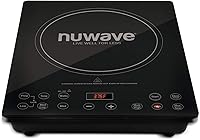
The Nuwave Precision 10.25-Inch Induction Cooktop offers 81 temperature settings from 100°F to 500°F in 5°F steps. It can suit cooks who want more temperature choices for tasks such as keeping a sauce warm.
For help deciding which controls matter to you, read induction cooktop temperature control: do you need it?. Power settings and temperature settings aren't interchangeable labels, so compare the cooktop's instructions before choosing a model.
Is induction more efficient than other cooktops?
Induction can reduce heat lost around the pan by heating compatible cookware directly. Energy use in your kitchen still depends on the cooktop, cookware, and how you cook.
A built-in unit and a portable burner may use different amounts of power. Cookware size, cooking time, and the selected setting matter too.
Nuwave says 85% to 90% of its cooktop's electromagnetic energy becomes heat energy. That figure doesn't tell you how much electricity your household will save.
To estimate what a specific cooktop might use, see how much electricity an induction cooktop uses. Check the appliance's power information and your own cooking habits when comparing options.
What safety features should you understand?
A cooktop's safety features vary by model, so follow its instructions before using them. Pan detection, heat indicators, timers, and locks don't replace supervision or careful handling.
The Duxtop 8100MC Portable Induction Cooktop has auto-pan detection and a diagnostic error system. The Empava Ease 30-Inch Built-In Induction Cooktop has a child lock, overheating prevention, a residual heat display, and automatic shutoff.
Keep the cooktop and the area around it clear, use suitable cookware, and avoid touching a hot pan or recently used zone. Follow the manufacturer's instructions for ventilation, electrical connection, and cleaning.
Which induction cooktop fits your setup?
Choose a portable burner for one cooking zone, or a built-in cooktop for several zones as part of your kitchen. Then match the controls and cookware size to your needs.
The Duxtop 8100MC Portable Induction Cooktop is a single-zone choice with power levels and a timer. The Empava Ease 30-Inch Built-In Induction Cooktop has 4 zones for a built-in kitchen.
The Nuwave Precision 10.25-Inch Induction Cooktop offers a portable single-zone option with 81 temperature settings. Its 3 wattage settings are 600, 900, and 1400 watts.
Before choosing, check that your cookware has a magnetic base and fits the cooking zone. If you want a portable model for regular meals, compare the best portable induction cooktops for countertops.
How does an induction cooktop work, in brief?
An induction cooktop uses a magnetic field to heat a compatible pan directly. The pan then heats the food, while the cooktop's glass can warm from contact with the pan.
Choose cookware with a magnetic base and a size that suits the cooking zone. Pick a model with power levels, temperature settings, or multiple zones according to how you cook, then review induction cooktop features worth having before comparing options.
Frequently asked questions
How does an induction cooktop heat a pan?
A coil beneath the glass creates a changing magnetic field that induces electrical currents in compatible cookware. The pan's resistance turns those currents into heat, so the pan heats without a flame or a glowing element beneath it.
Does an induction cooktop heat the glass?
The magnetic field heats compatible cookware directly, so the glass is not the heat source. It can still warm from contact with the pan, so treat the surface as hot during and after cooking until it cools.
How can you tell if cookware works with induction?
If a magnet sticks firmly to the outside bottom of a pan, it's likely compatible. Some stainless steel works, but cookware made only from aluminum, copper, or glass generally needs an added magnetic base.
Why does an induction cooktop stop heating when you lift the pan?
Induction needs compatible cookware over the cooking zone to heat the pan. Some cooktops detect when a pan is missing and pause or stop the zone; behavior and timing vary by model, so follow the cooktop's instructions.