How Much Electricity Does an Induction Cooktop Use?
A cooktop’s electricity use depends on its wattage and how long it runs. Multiply watts by hours, then divide by 1,000 to estimate kilowatt-hours (kWh).
On this page (8 sections)
- How do you calculate how much electricity an induction cooktop uses?
- What affects induction cooktop electricity use?
- Does a higher wattage cooktop always use more electricity?
- How does a double induction cooktop share power?
- Can a lower setting reduce electricity use?
- How can you estimate the cost of using an induction cooktop?
- Is an induction cooktop cheaper to run than gas?
- What should you check before choosing an induction cooktop for energy use?
An induction cooktop’s electricity use depends on its wattage, power setting, and cooking time. To estimate energy, multiply watts by hours of use and divide by 1,000; a 1,800 watt cooktop running at full power for 30 minutes would use 0.9 kWh.
That figure is an estimate, not a fixed amount for every meal. A cooktop may use less when set below full power or cycling to maintain heat, and a shorter cooking time can reduce total energy even if the burner’s rated wattage is high.
How do you calculate how much electricity an induction cooktop uses?
Use this formula: watts × hours ÷ 1,000 = kilowatt-hours (kWh). Your utility bill typically uses kWh to measure energy, so the result gives you a useful way to estimate a cooking session.
For example, a 1,800 watt cooktop running at full power for 20 minutes would use about 0.6 kWh:
- Convert 1,800 watts to 1.8 kilowatts.
- Convert 20 minutes to one-third of an hour.
- Multiply 1.8 by one-third to get 0.6 kWh.
This assumes the cooktop draws its full rated power for the whole session. Actual use can differ if you use a lower setting, cook for less time, or the appliance cycles power.
How much electricity does an induction cooktop use per hour?
At full power, a 1,800 watt cooktop uses 1.8 kWh in an hour. A 1,300 watt cooktop would use 1.3 kWh over an hour at full power, using the same calculation.
The number is useful for comparing possible use, but most cooking sessions don’t run at one setting for a full hour. Estimate each task using its approximate time and power, or use a suitable energy monitor to measure consumption.
What affects induction cooktop electricity use?
The power setting and the time spent cooking affect total energy use most directly. Cookware and the task can also influence how much power or time you need.
- Power setting: A lower setting generally draws less power than the cooktop’s maximum, though the exact draw depends on the model.
- Cooking time: A longer session uses more energy at the same average power.
- Cookware: Induction needs compatible cookware. A pan that works well with the cooking zone helps you use the appliance as intended.
- Cooking task: Bringing a large pot of water to a boil differs from holding a sauce at a low temperature.
Induction heats compatible cookware through a magnetic field, rather than heating a burner element first. Read how an induction cooktop works for an explanation of the heating process.
Does a higher wattage cooktop always use more electricity?
A higher wattage means a higher possible power draw, but it doesn’t automatically mean more energy for every meal. Total electricity use also depends on the setting and how long the cooktop runs.
A 1,800 watt model running at full power for 20 minutes uses about 0.6 kWh. A lower wattage cooktop could use a similar amount if it runs longer, so compare estimates for the same cooking task rather than looking at the maximum wattage alone.
Portable cooktops can have different wattage options. The Duxtop 8100MC has 15 power levels from 200 to 1,800 watts, which gives you a range of settings to consider when estimating use.
The Duxtop 8100MC uses 120 volts and 15 amps. Check your outlet and the cooktop’s instructions before use, and don’t assume the maximum wattage is the amount it draws throughout a meal.
How does a double induction cooktop share power?
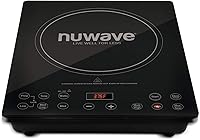
A double cooktop can manage the two cooking zones differently from a single burner, so check the model’s power guidance. The Nuwave PIC Double has two zones and describes its power management as allocating energy based on settings.
The product is rated at 1,800 watts and offers 900, 1,500, and 1,800 watt options. Those figures can help you frame an estimate, but the total draw for a particular pair of settings depends on how the unit manages both zones.
If you often use two burners at once, see how to use a double induction cooktop and share its power. The power-sharing behavior matters when estimating simultaneous cooking.
Can a lower setting reduce electricity use?
A lower setting can reduce average power draw, while a longer cooking time can offset some of that savings. The actual energy depends on the appliance’s controls and how much heat your recipe needs.
The Nuwave Flex offers three wattage settings: 600, 900, and 1,300 watts. Its range gives you different rated power options, but the energy for a meal still depends on the time spent cooking.
Use the setting that fits the recipe, and avoid extending cooking time unnecessarily. If precise low-heat control is a priority, induction cooktop temperature control explains what temperature settings can and can’t tell you.
How can you estimate the cost of using an induction cooktop?
Multiply estimated kWh by your electricity rate to estimate the energy charge. For example, if a session uses 0.6 kWh, multiply 0.6 by the rate per kWh shown on your bill.
Your bill may include fees or time-based rates, so this calculation is only an estimate of the energy portion. Use the rate and billing details that apply to your home.
For a closer estimate, track a few typical meals instead of relying only on maximum wattage. A plug-in energy monitor may help with a portable cooktop if it is rated for the appliance’s electrical load and used according to its instructions.
Is an induction cooktop cheaper to run than gas?
There isn’t one answer for every home because fuel rates and cooking habits vary. Compare the cost of energy used for similar meals, using your electricity rate and the cost of gas on your bill.
Induction transfers heat to compatible cookware, while a gas flame heats the pan and surrounding air. That difference can affect how much energy a cooking task needs, but it doesn’t determine your household’s cost by itself.
See whether you can have a gas and induction cooktop together if you’re deciding how to use both types in one kitchen. For the broader appliance comparison, electric vs. induction cooktops covers how their cooking methods differ.
What should you check before choosing an induction cooktop for energy use?
Compare the power options, cooking zones, and tasks you plan to do. A single portable unit may suit occasional cooking, while a double unit can help when you want two pans going at once.
Check your cookware for induction compatibility and confirm the cooktop’s voltage and electrical requirements. The guide to induction cooktop types and power can help you compare formats before choosing a unit.
If you want a compact portable burner with several power levels, the Duxtop 8100MC offers settings from 200 to 1,800 watts. If two cooking zones matter, consider the Nuwave PIC Double and its power management; for several wattage choices on one zone, the Nuwave Flex has 600, 900, and 1,300 watt settings.
When estimating how much electricity an induction cooktop uses, start with watts and cooking time, then adjust your estimate to match the setting and task. Compare kWh for similar meals, and use your bill’s rate to estimate the energy charge.
Frequently asked questions
How much electricity does a 1800 watt induction cooktop use?
At full power, a 1,800 watt cooktop uses 1.8 kWh for each hour of operation. For a shorter cooking session, multiply 1.8 kW by the time in hours; 30 minutes at full power would be 0.9 kWh.
Actual use can be lower when the cooktop cycles or runs below full power.
Does induction use more electricity than a regular electric stove?
It depends on the appliance and the cooking task. Compare the actual energy used in kWh for similar meals, rather than wattage alone, since cooking time and power setting affect the total.
Induction transfers heat to compatible cookware directly, while resistance elements heat the cooktop surface before the pan.
Does an induction cooktop use electricity when it is off?
A cooktop may draw a small amount of standby power if its controls or display remain active, but the amount depends on the model. Check its manual or measure it with a suitable energy monitor if standby use matters to you.
Unplugging a portable unit removes its connection to the outlet.
How can I estimate the cost of running an induction cooktop?
Estimate energy in kWh by multiplying the cooktop’s average power in kilowatts by cooking time in hours. Multiply that kWh figure by your electricity rate to estimate the energy charge, then check your bill for how the utility applies rates, fees, or time-of-use pricing.