How to Use a GE Induction Cooktop
To use a GE induction cooktop, place a magnetic pan on the ring, touch the On/Off pad, choose the burner, then set a power level. The surface only heats under cookware that a magnet sticks to, so nothing cooks on an empty ring.
On this page (10 sections)
- How do you get a GE induction cooktop ready to cook?
- How do you tell if a pan works on GE induction?
- How do you turn on and set a GE induction burner?
- What do the power levels and features actually do?
- How do you cook safely on an induction top?
- How do you clean a GE induction cooktop?
- Should you use a mat or protector on induction glass?
- How does a GE induction cooktop compare with camping and smaller units?
- What should you check first when the cooktop won't heat?
- What's the simplest routine for using a GE induction cooktop?
To use a GE induction cooktop, place a magnetic pan on the ring, touch the On/Off pad, choose the burner, then set a power level. The surface only heats under cookware that a magnet sticks to, so nothing cooks on an empty ring.
Once you've done that first cycle, the rest is mostly about pan choice, power settings and a clean glass top. This guide walks through the controls GE uses and the habits that keep induction fast and safe.
How do you get a GE induction cooktop ready to cook?
Start with a clean, dry surface and the right pan. A wet or gritty top can leave marks and can confuse the touch controls, so wipe it before the first burner goes on.
GE induction cooktops use touch controls with an On/Off pad, a burner selection area and a power slider or plus/minus pads. Read the control panel once to find those pads, since layouts vary between models.
The hot-surface light and the control lock usually sit nearby.
Check the ring size markings on the glass. The pan base should sit close to the ring diameter, because a base much smaller than the ring may not register.
Keep the pan centered rather than pushed toward an edge.
Dry the pan base too. Water between the pan and glass turns to steam and can leave a film.
With the top clean and the pan placed, the cooktop is ready for the next step.
How do you tell if a pan works on GE induction?
Do the magnet test: if a fridge magnet sticks firmly to the base, the pan will heat. That single check covers most cookware, and it's the first thing to try when a burner won't start.
Cast iron, most magnetic stainless steel and many enameled steel pans pass. Aluminum, copper and most glass or ceramic pots fail unless they have a magnetic base plate.
A weak stick means a weak magnetic layer, which can make the cooktop slow to recognize the pan.
For more on cookware and power draw, our guide to how much electricity does an induction cooktop use explains what the settings actually cost you.
What should you do when a pan isn't detected?
Move the pan to the center of the ring and try a larger base. Then check that the base is flat: a warped pan rocks and only touches the glass in spots, which trips the sensor.
If the pan still won't start, test it on another ring and try a known cast iron pan. A cooktop that beeps with a good pan on a clean ring may simply need a reset at the breaker.
Persistent errors on every ring point to service, not to your cookware.
How do you turn on and set a GE induction burner?
Touch On/Off, tap the burner you want, then slide or tap to a power level. The order matters on most GE panels: the burner won't accept a setting until it's been selected.
Power levels run from low simmer settings up to a boost level for quick boiling. Start lower than you think you need, because induction heats the pan base directly and responds faster than a radiant ring.
Add heat in steps rather than jumping straight to the top level.
Use the timer for anything you might walk away from. Many GE models count down and then switch the burner off.
The keep-warm setting on some models holds a low, steady heat for plated food.
When you finish, touch On/Off for that burner. Lifting a pan off a running ring also stops the transfer of heat, though the control stays on until you switch it off.
Get in the habit of clearing every active burner after cooking.
What do the power levels and features actually do?
Low levels melt and simmer, mid levels sauté and fry, and the boost level is for fast boils. Matching the level to the job is the main skill with induction, since pans react within seconds.
A simmer setting holds a gentle bubble for sauces and stocks. Medium settings suit eggs, pancakes and most pan frying.
High and boost settings bring a large pot of water to a boil quickly and are best used briefly, because sustained top-level heat can scorch.
Some GE cooktops add a bridge or sync feature that joins two rings so a griddle or large pan heats across both. Others include a control lock to stop accidental touches, which matters in a house with small children.
The lock typically holds the current settings until you press it again.
How do you cook safely on an induction top?
Keep the glass clear, use the control lock, and never leave hot oil unwatched. Induction removes the open flame, but hot pans, splashing oil and steam still carry the usual kitchen risks.
Keep paper, cloths and packaging off the surface. A pan left on a ring can transfer enough heat to scorch a towel that touches the glass beside it.
Use dry oven mitts and keep handles turned inward.
Don't slide pans across the surface more than needed. Lifting is gentler on the glass and keeps the base flat.
Cast iron can be heavy, so set it down rather than dropping it.
Ventilation still matters, since frying and boiling produce smoke and steam just as they do on gas. Wipe spills once the top cools.
If a burner won't shut off, switch off the breaker and contact GE support.
How do you clean a GE induction cooktop?
Wipe everyday spills with a soft cloth once the glass cools, and use a non-abrasive cleaner for cooked-on marks. Avoid steel wool and harsh pads, which can dull or scratch the surface.
For light soil, a damp microfiber cloth usually does the job. For greasy film or rings left by pans, apply a small amount of cooktop cream and buff with a clean cloth.
A plastic scraper lifts stubborn, cooled spills without gouging the glass.
The Cerama Bryte kit bundles a 10 oz cleaner, a scraper and a cleaning pad. It's non-abrasive and lists induction among the surfaces it suits, and it carries no phosphates or silicone.
The Weiman kit takes a similar approach with a 10 oz cream, a razor scraper and a non-scratch pad. Its cream uses micro-bead technology for baked-on spills and works on glass, ceramic and induction ranges.
Use one kit, not both at once, and buff with a dry cloth for a streak-free finish. Store the scraper flat so the blade stays safe between uses.
Should you use a mat or protector on induction glass?
A thin silicone mat can guard against scratches and stop pans sliding, but it slows heating and only suits induction. Skip it on radiant, coil or gas cooktops.
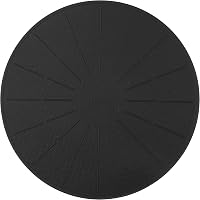
The Lazy K mat is silicone and fiberglass, dishwasher safe and rated to 480°F. It's designed for magnetic pans on induction rings, used by power setting rather than a temperature mode.
Expect pans to heat more slowly with a mat in place, especially with cookware that has only a thin magnetic layer. A pan with a weak base may not be recognized at all, so test yours before relying on it.
The mat is not an adapter for non-induction cookware and won't make aluminum pans work. For that, you need a pan with a magnetic base.
Our roundup of the best induction cooktops for home use covers models with generous ring layouts if you're still shopping.
How does a GE induction cooktop compare with camping and smaller units?
The controls are similar, but a full GE cooktop has more rings and a fixed installation. A portable unit is the better pick when you need induction away from the kitchen.
If you want induction on the road, our guide to whether you can use an induction cooktop for camping covers wattage, pans and power sources. Portable units often top out lower than a built-in range, so boiling times differ.
If you're moving from a portable induction plate, the steps feel familiar. Our walkthrough of how to use a Nuwave Precision induction cooktop covers the smaller control set you may already know.
The On/Off, burner select and power steps are the same idea on a larger panel.
What should you check first when the cooktop won't heat?
Check the pan, the ring and the control lock before assuming a fault. Most no-heat cases trace to cookware that isn't magnetic or a burner that was never selected.
Try a cast iron pan you know works and center it on the ring. Press On/Off, then the burner pad, then a mid power level.
Confirm the control lock isn't holding the panel. If a timer is running and has ended, reset the burner.
A cooktop that trips the breaker may share a circuit with other heavy appliances. Move smaller loads off that circuit and try again.
If every ring fails with good pans and the breaker holds, book service with GE rather than opening the unit yourself.
What's the simplest routine for using a GE induction cooktop?
Clean the glass, test your pans with a magnet, select the burner, set a moderate level and switch off when done. That five-step habit covers nearly every meal.
Start low and adjust up, because induction responds fast. Keep the top clear and lock the controls when little hands are around.
Wipe spills after the glass cools, and reach for a non-abrasive cleaner when marks build up.
The pan matters more than any setting. Buy magnetic cookware first, then let the power levels do the rest.
Pair the cooktop with a scraper kit for easy cleanup and a mat only if scratches or sliding pans become a problem.
Frequently asked questions
Why does my GE induction cooktop beep and shut off?
It usually means the pan is missing, too small for the ring, or not magnetic enough. Move the pan to the center, size it to the ring, and try a cast iron or magnetic stainless pan before calling for service.
Can I leave a GE induction cooktop plugged in all the time?
Yes, it draws no meaningful power when the burners are off. For extra safety, use the control lock and keep the surface clear, or switch off the breaker when you'll be away for a long time.
Does a GE induction cooktop work with a wok?
Only if the wok is induction-ready with a flat, magnetic base. A round-bottom carbon steel wok won't make full contact with the glass, so look for a flat-bottom wok rated for induction.
What size pan should I use on an induction ring?
Match the pan base to the ring marking as closely as you can. A base much smaller than the ring may not trigger the sensor, and an oversized pan can waste energy and crowd the next burner.
Is the glass top still hot after I turn induction off?
The glass cools quickly because the pan is the heat source, but residual pan heat can leave the surface warm. Give it a moment and use the hot-surface light as your guide before wiping or touching.