How to Use a Wolf Induction Cooktop
To use a Wolf induction stove top, set a magnetic pan on the marked zone, touch the power button, choose that zone and raise the heat. The surface only warms where the pan sits, so the ring glows and the rest stays cooler.
On this page (9 sections)
- How do you turn on a Wolf induction stove top?
- Which cookware works on a Wolf induction cooktop?
- How do you set and change the heat on an induction zone?
- What do the panel symbols and settings mean?
- How do you lock the controls and use the safety features?
- How do you clean a Wolf induction cooktop?
- Can you use a silicone mat on an induction cooktop?
- How much electricity does a Wolf induction stove top use?
- What should you know before you first cook?
To use a Wolf induction stove top, set a magnetic pan on the marked cooking zone, touch the power button, select that zone and raise the heat. Induction only heats the base of the pan, so the ring shows where to cook and the rest of the glass stays cooler than a radiant top.
Wolf builds its induction cooktops for home kitchens, and the controls follow the same order on most of its models. This guide walks through the settings you touch in order, how to lock the panel, and how to keep the glass looking new.
How do you turn on a Wolf induction stove top?
Touch the main power control, then pick the zone you want to use. The cooktop stays quiet until a pan sits on a ring and you set a heat level.
Start by placing a pan on one of the marked zones. Induction needs a magnetic base, so the ring won't respond to glass, copper or most aluminum cookware.
When the pan is in place, press the power button and tap the zone you want.
Each zone has its own heat control. Raise it gradually from the lowest setting so you can watch how fast the pan heats.
A ring indicator or a small display confirms the zone is on.
When you're done, lower the heat to the minimum and turn the zone off before lifting the pan. Then press the main power button so the whole panel goes dark.
If you own another brand, the sequence is close; our guide to how to use a Miele induction cooktop covers the same steps for its controls.
Which cookware works on a Wolf induction cooktop?
Only pans with a flat, magnetic base will heat on induction. Test yours with a magnet: if it sticks firmly to the bottom, the pan should work.
Cast iron and most magnetic stainless steel are the reliable choices. Cookware with a thick magnetic disc in the base also works, which is why some nonstick pans are labeled induction-ready.
A pan that only holds the magnet weakly may not be recognized.
A wobbling or domed base makes poor contact and heats unevenly. Pick pans with a flat bottom that covers most of the ring but doesn't overhang it far.
Smaller pans work on the smaller zones, and a pan much narrower than the ring may not trigger the sensor at all.
Aluminum, copper and glass pans won't heat on induction on their own. You can still use them with a magnetic adapter plate, though the surface won't respond as quickly.
Our roundup of the best induction cooktops for home use shows which models handle mixed cookware best.
How do you set and change the heat on an induction zone?
Select the zone, then raise or lower its power in small steps. Induction responds quickly, so the pan reacts within seconds rather than minutes.
Touch the zone key first so the panel knows which ring you mean. Then press the plus or slider to move up from low.
Start lower than you would on a gas burner and adjust from there.
Power levels differ from a gas flame. A middle setting on induction can boil water faster than a high flame, so give the pan a moment before pushing the level up.
For a gentle simmer, drop to the lowest setting and let the pan settle.
Some Wolf models include a bridge setting that joins two zones for a griddle or wide pan. Look for the linked-zone symbol on the panel and press both zone keys when the cooktop offers it.
Keep the pan centered while you cook, because lifting it off the ring cuts the heat.
What do the panel symbols and settings mean?
Most symbols control one job: which zone is on and how hot it runs. A pan-detection icon shows when a zone is ready, and a lock icon keeps small hands from changing the settings.
The main power key turns the whole cooktop on and off. Zone keys select each ring, and the plus and minus controls or a slider set the level.
A timer key can count down a zone or the whole cooktop.
A boost or power setting pushes one zone to its top output for a short time. Use it to bring a large pot to a boil, then drop back to a normal level.
A keep-warm setting holds food at a low temperature without a full simmer.
The control lock, sometimes called a child lock, disables the panel so touches do nothing. Hold the lock key for a few seconds to turn it on or off.
Check your model's panel for the exact icon, since Wolf layouts change between ranges and cooktops.
How do you lock the controls and use the safety features?
Hold the lock key to freeze the panel, then hold it again to open. Lock it before wiping the glass so a cloth doesn't switch on a zone.
With the panel locked, taps and swipes do nothing until you open it. Most models show a lock light so you can see the state at a glance.
The cooktop also watches each zone. If a pan lifts off or a zone has no pan, the ring shuts down or won't start.
A pan-too-small warning stops a tiny pot from running a large zone.
Residual heat indicators light up after a zone has been used. They warn that the glass around the ring is still warm even when the pan has moved.
Turn zones off before you lift a pan, and never leave an empty pan heating on a zone.
How do you clean a Wolf induction cooktop?
Let the glass cool, then wipe it with a non-abrasive cooktop cream and a soft pad. A final dry buff removes streaks and keeps the surface clear.
Start with a daily wipe using a soft cloth or paper towel. For grease and fingerprints, a small amount of cooktop cleaner goes a long way.
Apply a quarter-sized amount to the cool surface, rub with a cleaning pad and buff dry.
For burnt-on spots, a razor scraper used flat against the glass lifts the residue without digging in. Keep the blade at a shallow angle and work around the spot rather than pressing hard.
Avoid abrasive powders and scouring pads on the glass.
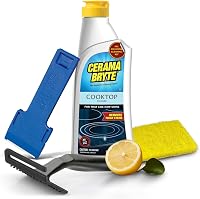
The Cerama Bryte kit bundles a 10 oz bottle of non-abrasive cleaner, a scraper tool and a cleaning pad. It contains no phosphates or silicone, so it won't leave a cloudy film behind.
Which cleaner should you pick for glass induction tops?
A non-abrasive cream made for glass or ceramic cooktops is the safe default. Both kits in this guide are labeled for induction, glass and ceramic surfaces.
The Weiman 3-piece kit pairs a 10 oz cream with a non-scratch scrubbing pad and a razor scraper. Its micro-bead formula is meant to break down baked-on spills, and the blade stores flipped inward for safety until you turn the dial and flip it out.
Pick Weiman if burnt-on food is your main problem and you want a heavier-duty cream. Pick the Cerama Bryte kit for routine cleaning and a smaller amount per use.
Neither should be used on a hot surface; let the glass cool first.
Can you use a silicone mat on an induction cooktop?
Yes, if the mat is made for induction and you use a magnetic pan on top of it. It sits between the pan and the glass to prevent scratches and stop pans from sliding.
The Lazy K mat is 11 inches across and made from silicone and fiberglass. It's safe in the oven up to 480°F and can double as a pot holder.
Its job is protection: fewer scuffs on the glass and less sliding while you stir.
The mat only works on induction, so don't put it on a gas, coil or glass electric top. Pans can heat more slowly through the mat, especially ones with a thin magnetic layer.
Use power settings rather than temperature settings when the mat is in place. Clean the mat in the dishwasher when it gets greasy.
For cooking away from a full range, our post on whether you can use an induction cooktop for camping covers portable setups.
How much electricity does a Wolf induction stove top use?
Induction uses less energy than a radiant or gas top for most cooking tasks. The zone only heats the pan, so less heat escapes into the room.
The savings come from efficiency. An induction ring puts most of its energy into the cookware base instead of the air, so boiling water takes less time on the same setting.
A covered pot helps further.
A Wolf induction cooktop draws power zone by zone. One zone at high power pulls more than several at low, and the boost setting pulls the most for short bursts.
Cooking on medium with a lid usually beats blasting a high zone.
Your monthly cost depends on your rate and how long you cook. Our guide to how much electricity does an induction cooktop use breaks down the figures so you can compare a Wolf against a gas or electric range.
What should you know before you first cook?
Run a short test with a pan of water before you plan a meal. It confirms the pan is magnetic, the zone responds and the panel settings make sense.
Fill a small pot with water and set it on a ring. Turn the zone to a middle level and watch how long it takes to heat.
If nothing happens, move the pan or try a different one; the cooktop likely didn't detect the base.
Then try the boost setting and the timer on the same zone. Learn the lock and open sequence while the surface is cool.
Once you know how to use a Wolf induction stove top in this order, everyday cooking gets faster. Keep a scraper and a non-abrasive cream within reach so small spills don't harden.
Frequently asked questions
Why does my Wolf induction cooktop beep and shut off?
It usually beeps when a zone has no compatible pan, a pan is too small for the zone, or a pan lifts off while cooking. Center a flat magnetic pan on the ring and start the zone again.
What pans work on a Wolf induction stove top?
Use cookware with a flat, magnetic base, such as most cast iron and magnetic stainless steel. A magnet should stick firmly to the bottom; glass, copper, aluminum and most ceramic pans won't work without a magnetic insert.
Can you use a silicone mat on a Wolf induction cooktop?
A mat made for induction cooking can sit under a magnetic pan and help stop scratches and sliding. It's only for induction, so don't put it on a glass electric, gas or coil top.