How to Use an Induction Stove Top
To use an induction stove top, set a magnetic pan on the marked ring, press the power button, and choose a power or temperature level. The surface stays cool except where the pan sits, so it heats fast and needs a pan with a flat, magnetic base.
On this page (9 sections)
- Which cookware works on an induction stove top?
- How do you start cooking on an induction cooktop?
- How do you choose between power levels and temperature settings?
- How do you set the timer and use the preset buttons?
- How do you stay safe while cooking on induction?
- How much power does an induction stove top draw?
- How do you clean and protect the glass surface?
- What should you check before you buy an induction stove top?
- The short version
To use an induction stove top, set a magnetic pan on the marked ring, press power, and choose a power or temperature level. The surface stays cool except where the pan sits, so it heats fast and needs cookware with a flat, magnetic base.
The rest is timing and habit: letting the pan detect before you raise the level, using the timer, and wiping the glass only after it cools.
Which cookware works on an induction stove top?
Use a pan with a magnetic base that sits flat on the ring. Hold a magnet to the base: if it sticks firmly, the pan should work.
Most cast iron and many stainless steel pans pass, while aluminum, copper and glass pans without a magnetic layer do not.
Check the base diameter too. A portable burner like the Duxtop 9600LS needs cookware with a minimum diameter of 5 inches.
A pan smaller than that, or one with a warped base, heats unevenly.
Thin pans are the usual cause of trouble. A base with only a thin magnetic layer can be missed by the sensor, and the burner may cut out as the pan shifts.
A heavier pan holds contact better.
Avoid dragging the pan across the glass. Lift and set it down instead, and keep the base dry before it touches the ring.
How do you start cooking on an induction cooktop?
Press power, then set a level before you add food. Most units need to detect the pan first, and some will not accept a setting without a pan in place.
Place the pan, press power, then tap the level you want.
Heat the pan empty for a short time on a low or medium setting, then add oil or food. The glass does not glow, so you judge heat by the pan, the food and the display.
A drop of water in the pan sizzles within seconds on a working setting.
If the burner does not come on, lift the pan and set it down again on the center of the ring. Off-center placement is a common reason the sensor fails to read the base.
On a multi-burner unit, make sure you pressed the control for the ring the pan is on.
How do you choose between power levels and temperature settings?
Pick power levels for boiling and frying, and temperature settings for holding or melting. Power levels control how hard the burner works, while temperature settings aim for a target pan temperature.
The Duxtop 9600LS offers 20 power levels from 100 to 1800 W and 20 temperature settings from 100°F to 460°F.
Use power for water, stock, searing and stir-frying. Water comes to a boil quickly on a high level, then drops to a lower one to simmer.
For a sear, start high and lower the setting once the pan is hot so the outside browns without the center overcooking.
Use temperature settings for anything delicate: melting chocolate or butter, keeping a sauce warm, or holding a dish until the meal is ready. The cooktop cycles the burner to hold the target, which reduces scorching.
How do you set the timer and use the preset buttons?
Set the timer when you want the burner to stop without you watching it. On the Duxtop 9600LS, the timer runs up to 10 hours, and there is a fast boil button and a keep warm button for 1 to 30 minutes at 140°F.
Press the timer control, set the time, and the burner counts down.
The fast boil button takes water up to heat without you choosing a level by hand. The keep warm button holds food at a low temperature.
Use the child safety lock when small hands are near the controls, so the settings cannot be changed once set.
Do not leave the kitchen for a long stretch just because a timer is running. A timer ends the cycle, but it does not watch the pan.
How do you stay safe while cooking on induction?
Keep the pan handle turned inward and keep metal utensils off the glass. The surface under the pan gets hot from contact, even though the glass away from the pan stays cool.
Treat the cooking zone as hot while in use and for a few minutes after.
Turn the burner off before you lift the pan away, and let the surface cool before you touch it. Keep the cord of a portable unit away from the cooking zone and the water, and plug it into a standard 110/120 V outlet.
The Duxtop 9600LS uses a 110/120 V 15 amp outlet.
Never put a spoon or a lid directly on the cooking ring while the burner is on. A metal item resting on the glass can heat without a pan to absorb the energy.
Use a spoon rest, and keep paper and cloth away from the ring.
If the cooktop shuts itself off, the pan or the placement is usually the reason. The burner turns off after about 60 seconds when it detects no cookware or the wrong cookware.
Lift the pan, check the base, and set it back down on the ring.
How much power does an induction stove top draw?
A countertop induction burner draws up to about 1800 W, close to the limit of a standard 15 amp circuit. At full power it uses most of that outlet's capacity, so avoid running another high-draw appliance on the same circuit at the same time.
Efficiency is the upside. The Duxtop 9600LS is rated at 83% energy efficiency, because induction heats the pan rather than the air around it.
Less heat escapes into the kitchen, so a summer session feels cooler than a gas or coil burner.
For a full breakdown of wattage and running costs, see how much electricity does an induction cooktop use. If you plan to take a burner on the road or to a campsite, read can you use an induction cooktop for camping before you pack one.
Which portable induction burner suits a first-time user?
Pick the Duxtop 9600LS if you want a single burner with both power and temperature control and a display that shows the setting. It measures 11.4 x 14 x 2.5 inches and weighs 6.2 pounds, so it stores in a cabinet between meals.
The glass surface is flat and easy to wipe, and the touch controls sit at the front. A 2-year manufacturer warranty covers the unit.
It suits a small kitchen, a dorm room or a second cooking station. For more than one ring, compare the best induction cooktops for home use.
How do you clean and protect the glass surface?
Wipe the glass after it cools, and keep the ring clear of grit. Food and crumbs trapped under a pan can scratch the surface as the pan moves.
Let the cooktop cool fully, then wipe with a soft cloth and a cleaner made for smooth cooktops.
For marks that have baked on, use a cooktop cleaner with a scraper tool. Apply a small amount to the cool surface, rub with the pad, buff and wipe clean.
Avoid abrasive pads and harsh sprays, which can dull the finish over time.
Which cleaning kit should you keep next to the cooktop?
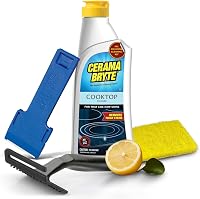
Choose the Cerama Bryte Cooktop Cleaning Kit if you want one set for daily wiping and for burnt-on spots. The 4-piece kit includes a 10 oz bottle of cleaner, a POW-R Grip Pad Tool, a scraper and a cleaning pad.
Cerama Bryte says the formula is non-abrasive and contains no phosphates, dimethicone or silicone, and the kit is made in the USA. Use the scraper flat against the glass for burnt-on food, never at an angle that digs in.
How do you keep the surface free of scratches?
Set a mat under the pan if scratches are a worry. The Lazy K mat is a silicone and fiberglass pad for induction cooktops only; it is not for electric glass, gas or coil cooktops and is not an adapter for non-induction pans.
The mat is safe up to 480°F and can double as a pot holder. Use it only with power settings, and make sure your pan has a flat base and a strong magnetic coating.
A pan with a weak magnetic layer may heat more slowly on the mat or fail to be detected.
What should you check before you buy an induction stove top?
Confirm the outlet, the pan you already own and the surface you will set it on. A portable burner needs a standard 110/120 V outlet and clear countertop space.
A built-in model needs a cutout that matches its dimensions and a dedicated circuit.
Check the pan first with a magnet. If your everyday pans do not stick, budget for a magnetic pan or two along with the cooktop.
Then measure the countertop or the cutout, and leave room behind the unit for airflow.
Decide how many burners you need. A single burner suits small meals and backup cooking.
A two-burner or built-in unit fits a full kitchen, and the induction cooktop comparison covers those options.
If you own a KitchenAid model, the controls differ slightly from a portable unit. Our guide to how to use a kitchenaid induction stove top walks through its panel and settings.
The short version
To use an induction stove top, start with a magnetic pan on the ring, press power and set a level, then adjust as the pan heats. Keep the glass clear, use the timer for long cooks, and wipe the surface only after it cools.
Pick the Duxtop 9600LS for a single portable burner with power and temperature control. Add the Lazy K mat if scratches worry you, and keep the Cerama Bryte kit nearby for burnt-on marks.
The one habit that matters most is lifting the pan instead of sliding it.
Frequently asked questions
Do induction cooktops work with all pots and pans?
No. Induction needs cookware with a magnetic base, such as most cast iron and many stainless steel pans.
Hold a magnet against the base; if it sticks firmly, the pan should work, while aluminum, copper and glass pans without a magnetic layer will not.
Why does my induction stove top keep switching off?
The pan is usually the cause. A burner shuts off after about 60 seconds when it detects no cookware or the wrong cookware, so check that the base is flat, at least 5 inches across and strongly magnetic, then set the pan back on the ring.
Can I leave an induction cooktop plugged in when not cooking?
It can stay plugged in, but press the power button to standby and unplug it for cleaning or when you will be away. Always switch off the burner and let the cooktop cool before wiping the glass.
Does the induction surface stay cool?
The glass itself stays mostly cool because the heat forms in the pan base. The pan and the ring under it get hot, and the surface warms from contact with the pan, so use the pan handle and keep your hands away from the cooking zone.
Why does my induction cooktop make a humming noise?
A slight hum or a high-pitched sound is normal. The cooktop's cooling fan and the layered metals in the pan base create the noise during heating; it usually changes with the power setting and is not a sign of a fault.