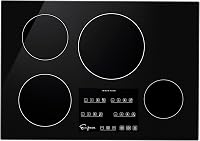
Induction Cooktop Sizes: 24, 30 and 36 Inch Compared
Induction cooktop dimensions vary by model: 24 inches suits compact kitchens, 30 inches fits many standard layouts, and 36 inches gives you more room for several pans. Check the cutout, cabinet clearance, and electrical requirements before choosing.
On this page (7 sections)
- What do 24, 30, and 36 inch cooktop sizes mean?
- Which induction cooktop dimensions fit your kitchen?
- How do you measure for an induction cooktop?
- Does a larger cooktop always mean more cooking capacity?
- What else should you compare besides width?
- What setup and care mistakes should you avoid?
- Which induction cooktop size should you pick?
Induction cooktop dimensions vary by model: 24 inches suits compact kitchens, 30 inches fits many standard layouts, and 36 inches gives you more room for several pans. Check the cutout, cabinet clearance, and electrical requirements before choosing.
The nominal width is only a starting point. The appliance's outside size does not tell you the exact counter opening, depth, or clearances needed for installation.
What do 24, 30, and 36 inch cooktop sizes mean?
The size in inches usually refers to the cooktop's approximate outside width. Use it to narrow your choices, then check the exact dimensions and installation requirements for each model.
| Nominal width | A common fit | Main trade-off |
|---|---|---|
| 24 in | Compact kitchens or narrow counters | Less room between pans |
| 30 in | Many standard kitchen layouts | Balances counter space and cooking room |
| 36 in | Wider counters and larger cooking areas | Needs more counter and cabinet width |
Treat these as size categories, not guaranteed measurements. Models vary, and an appliance's outside width is different from the cutout dimensions.
Which induction cooktop dimensions fit your kitchen?
Start with the counter opening and cabinet, then decide how much cooking room you need. Your measurements may rule out a size before features or burner count become relevant.
Is a 24 inch induction cooktop enough?
A 24 inch cooktop suits a compact kitchen or a household that usually cooks with a few pans. Its narrower footprint can leave more counter space for food prep than a wider built-in model.
The Empava Ease 24-Inch measures 23.23 in wide by 20.47 in deep and has four heating elements. Those are the cooktop's outside dimensions, not the required cutout size.
Choose this size if the opening and cabinet fit it and you value counter space. Skip it if you regularly cook with several large pans at once or your pan handles need more room between zones.
Does 30 inches fit many built-in layouts?
A 30 inch cooktop suits kitchens with room for a standard-width cooking surface and cooks who want a balance of counter space and flexibility. It offers more surface area than a compact model without requiring as much width as a 36 inch unit.
The Empava Ease 30-Inch measures 30 in wide by 21 in deep and has four heating elements. Confirm its cutout and clearance requirements in the installation guide before comparing it with your counter.
This is the most flexible starting point if you're replacing a cooktop of a similar size and your measurements support it. Skip it if your current opening is too narrow or you need the additional cooking space of a larger surface.
For more options at this width, see our guide to 30 inch built-in induction cooktops.
When is a 36 inch cooktop worth the space?
A 36 inch cooktop suits a wider kitchen where you want more room for multi-pan cooking. Its larger footprint takes more counter and cabinet space, so measure before choosing it.
The Empava Ease 36-Inch measures 36 in wide by 21 in deep and has five heating elements. The extra zone can help when several pans are in use, but pan size and zone layout still determine how comfortably they fit together.
Choose it if the installation space supports the wider unit and you routinely cook with several pans. Skip it if the kitchen is compact or your meals rarely need more than a few zones.
Before a size change, review what to check before installing a built-in induction cooktop.
How do you measure for an induction cooktop?
Measure the counter opening, countertop, and cabinet separately, then compare them with the chosen model's installation guide. Do this before ordering, especially when replacing an older cooktop.
- Measure the cutout width and depth. Measure the opening itself, not just the glass surface.
- Check the counter thickness and edges. Confirm that the cooktop can rest on the counter as intended.
- Measure the cabinet space below. Look for drawers, an oven, rails, or other items that could affect clearance.
- Check the electrical setup. Match the wiring and circuit to the cooktop's installation instructions.
- Review required clearances. Follow the instructions for nearby walls, cabinets, and appliances.
Don't cut or enlarge a countertop based only on nominal width. If you plan to replace a gas cooktop with induction, check the opening, cabinet, and electrical work before choosing a replacement size.
Does a larger cooktop always mean more cooking capacity?
A wider cooktop can give you more cooking room, but zone layout and pan size matter just as much. Compare the position of each zone with the pots and pans you use most.
The 24 and 30 inch Empava models each have four heating elements, while the 36 inch model has five. A fifth zone can help with multi-pan meals, but it doesn't guarantee that every pan will fit comfortably at once.
Check where the controls sit and whether handles will crowd neighboring pans. Also consider whether your largest cookware suits the zones.
Induction also requires compatible cookware. Read how induction cooktops work for a clear explanation of how the cooktop heats a pan.
What else should you compare besides width?
Compare depth, zone count, control placement, and installation needs along with width. Each affects the fit or the way the cooktop works in your kitchen.
- Depth: A deeper unit may extend farther over the cabinet below.
- Zone count and layout: More zones help with multi-pan meals only if they fit your usual cookware.
- Controls: Check that pans won't block the controls while cooking.
- Electrical requirements: Make sure the kitchen's circuit and wiring match the installation instructions.
- Safety features: A hot-surface indicator or child lock may be useful for your household.
The Empava 24, 30, and 36 inch models all have four or more zones and touch controls. All have a smooth glass ceramic surface.
The 24 inch model has a child lock and hot-surface indicator, while the 30 and 36 inch models add individual timers and power boost; compare these features after confirming the fit. For an overview of built-in and portable styles, read induction cooktops explained.
What setup and care mistakes should you avoid?
Confirm the fit and electrical requirements before installation, then follow the manual for setup and care. Planning the space first helps prevent a cooktop that cannot sit safely in the opening.
Don't use outside width as the cutout measurement, assume an existing circuit is suitable, or overlook cabinet space below. If the opening or wiring needs changes, have the work assessed by a qualified professional.
For everyday use, match induction-compatible cookware to the zone and keep the glass surface clear of grit that could scratch it. Let the surface cool as directed, then clean it with care; see how to clean an induction cooktop without scratching it.
Which induction cooktop size should you pick?
Pick 24 inches for a compact kitchen, 30 inches for a balanced built-in fit, or 36 inches for more room when your kitchen can accommodate it. Your measured opening, cabinet clearance, and electrical setup decide which one is practical.
The Empava Ease 30-Inch is the best middle-size fit among these three, with four heating elements and a score of 7.6. Choose the 24-Inch when counter width is limited; choose the 36-Inch when you have space for a wider cooktop and will use its fifth zone.
For the right induction cooktop dimensions, match the exact outside size and cutout requirements to your kitchen before ordering. If you're unsure about the installation, review the built-in cooktop installation checks before making your choice.
Frequently asked questions
What size induction cooktop should I choose?
Choose a 24 inch cooktop for a compact counter, 30 inches for a common built-in size, or 36 inches when you want more room for pots and pans. The right choice also depends on the cutout, cabinet, electrical setup, and cookware you use.
Measure the existing opening before shopping.
Are induction cooktop dimensions the same as cutout dimensions?
No. Cooktop dimensions describe the appliance's outside size, while cutout dimensions describe the hole in the counter where it sits.
A cooktop's width alone cannot confirm a fit.
Check the installation guide for the exact opening size and clearances, then compare those measurements with your counter and cabinet.
Is a 36 inch induction cooktop better than a 30 inch model?
A 36 inch model can give you more cooking zones and room for several pans, but it needs a wider counter opening. A 30 inch model may suit a tighter layout and still offer multiple zones.
Compare your available space, cookware, and cooking habits before deciding.
Can I replace a 30 inch cooktop with a 36 inch induction cooktop?
Sometimes, but the wider unit needs a suitable counter opening, cabinet space, and electrical connection. Don't assume a 30 inch cutout can take a 36 inch cooktop.
Check the new unit's installation instructions and have a qualified professional assess any counter or wiring changes.